Purified Water vs. Water for Injection

The Quick Comparison Table:

Feature Purified Water (PW) Water for Injection (WFI)
Quality Standards Meets pharmacopoeia standards for chemical purity and microbial counts. Meets stricter PW standards with very low bacterial endotoxin limits.
Production Process Uses Reverse Osmosis (RO), deionization, and filtration. Typically produced by distillation. RO-based systems are accepted in some pharmacopoeias (e.g., USP).
Main Uses Non-sterile products, cleaning, and early-stage processing. Injectable drugs and final rinsing of critical equipment.
Microbial Control Controlled bioburden levels. Must be sterile and endotoxin-free.
System Validation Requires full validation (DQ, IQ, OQ, PQ). Requires stricter validation and endotoxin monitoring.

A Simple Explanation

Think of it like this: Purified Water is “very clean,” while Water for Injection is “ultra-pure and safe for the bloodstream.”

  1. The “What”: Quality Standards
    The key difference is endotoxins. PW controls bacteria, while WFI has strict endotoxin limits, making it suitable for injectable drugs.
  2. The “How”: Production Process
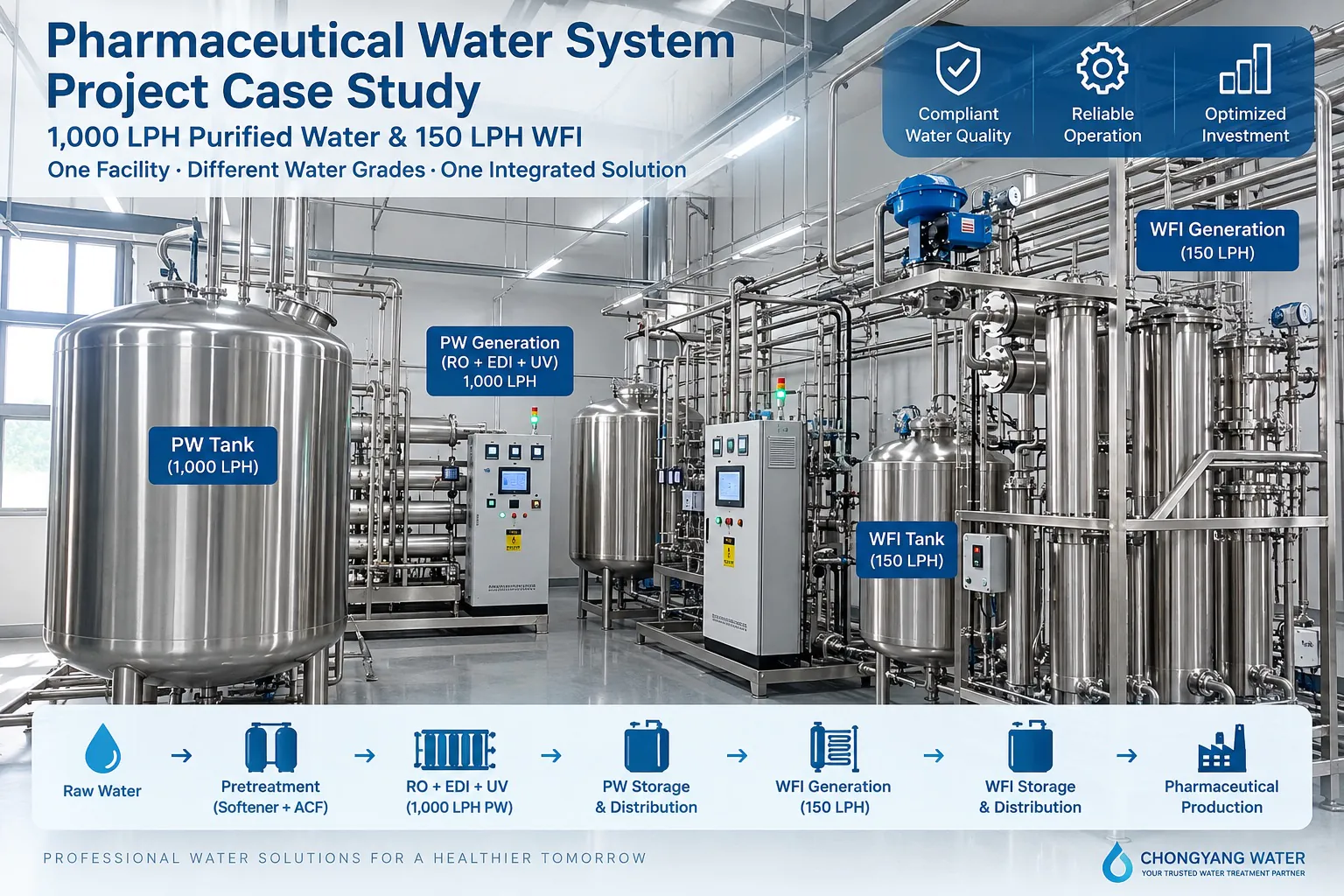
    PW is typically produced using Reverse Osmosis systems. WFI requires processes capable of removing endotoxins, with distillation being the most proven method.
  3. The “Where”: Uses in the Pharma Plant
    PW is used for cleaning, oral liquids, and general applications. WFI is reserved for critical uses where water enters the bloodstream or for final rinsing of sterile equipment.

Key Takeaway:

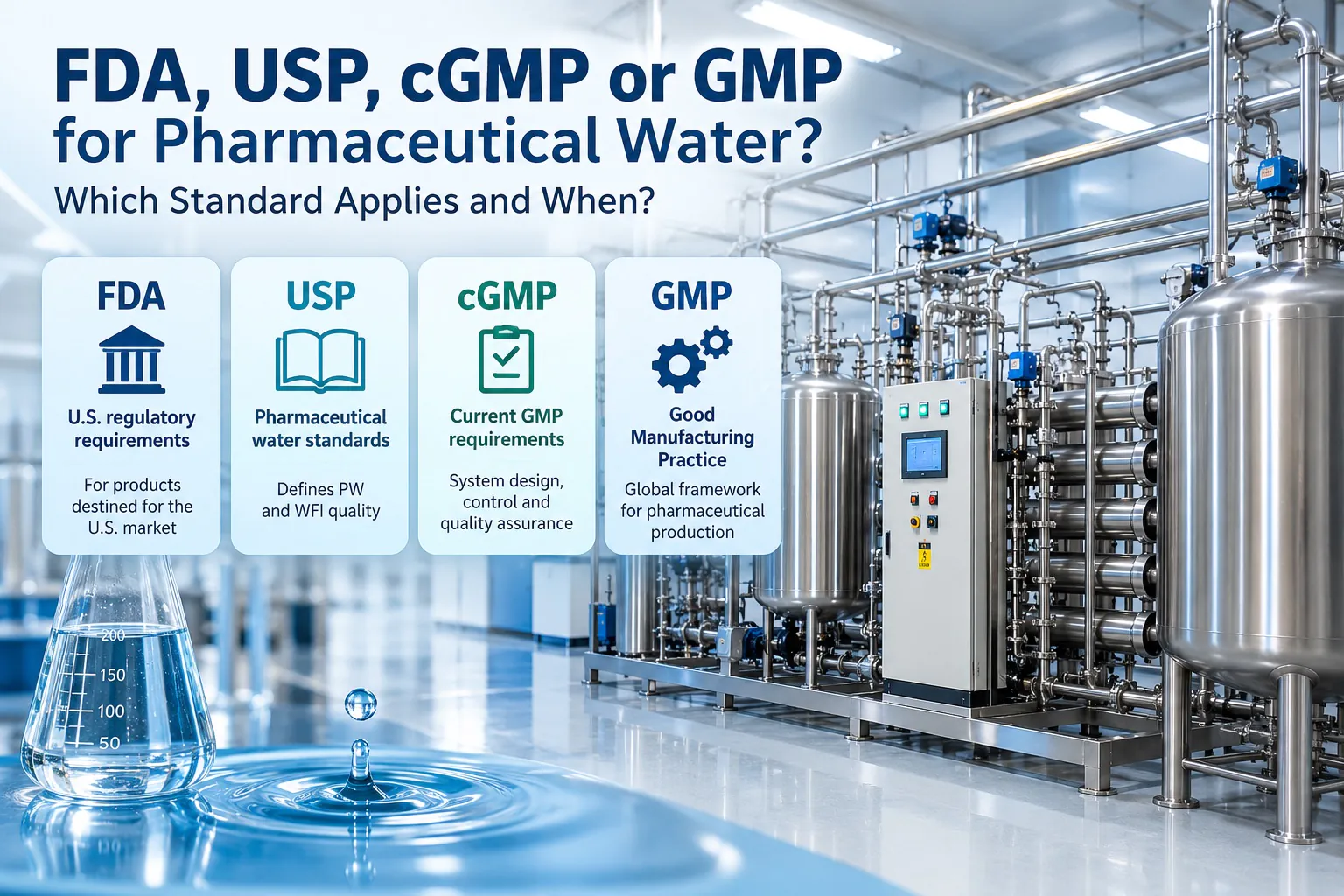
Choosing between PW and WFI depends entirely on the final application. Incorrect selection can lead to serious GMP compliance risks. Always follow pharmacopoeia requirements and validated processes to ensure proper water quality.