Purified Water System for Pharma: Design & Applications
1. Introduction
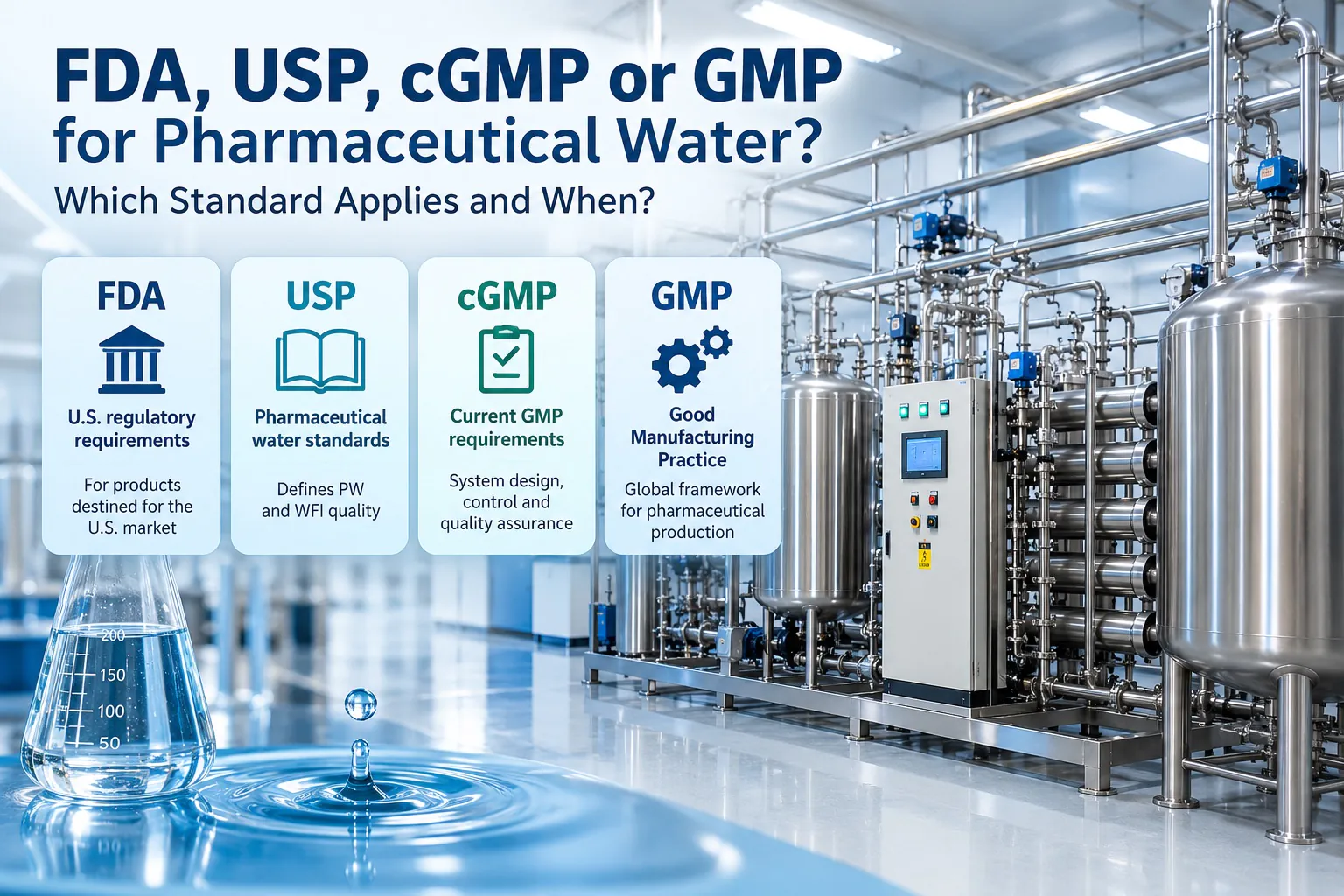
A purified water system is a critical utility in pharmaceutical manufacturing, directly affecting product quality, process reliability, and regulatory compliance. Under GMP, water is treated as a key raw material used in formulation, cleaning, CIP, and equipment rinsing.
Any deviation in water quality can lead to contamination, batch rejection, or audit findings. This article explains what a purified water system is, where it is used, its key design features, and how it works to consistently deliver compliant water quality.
2. What Is a Purified Water System?
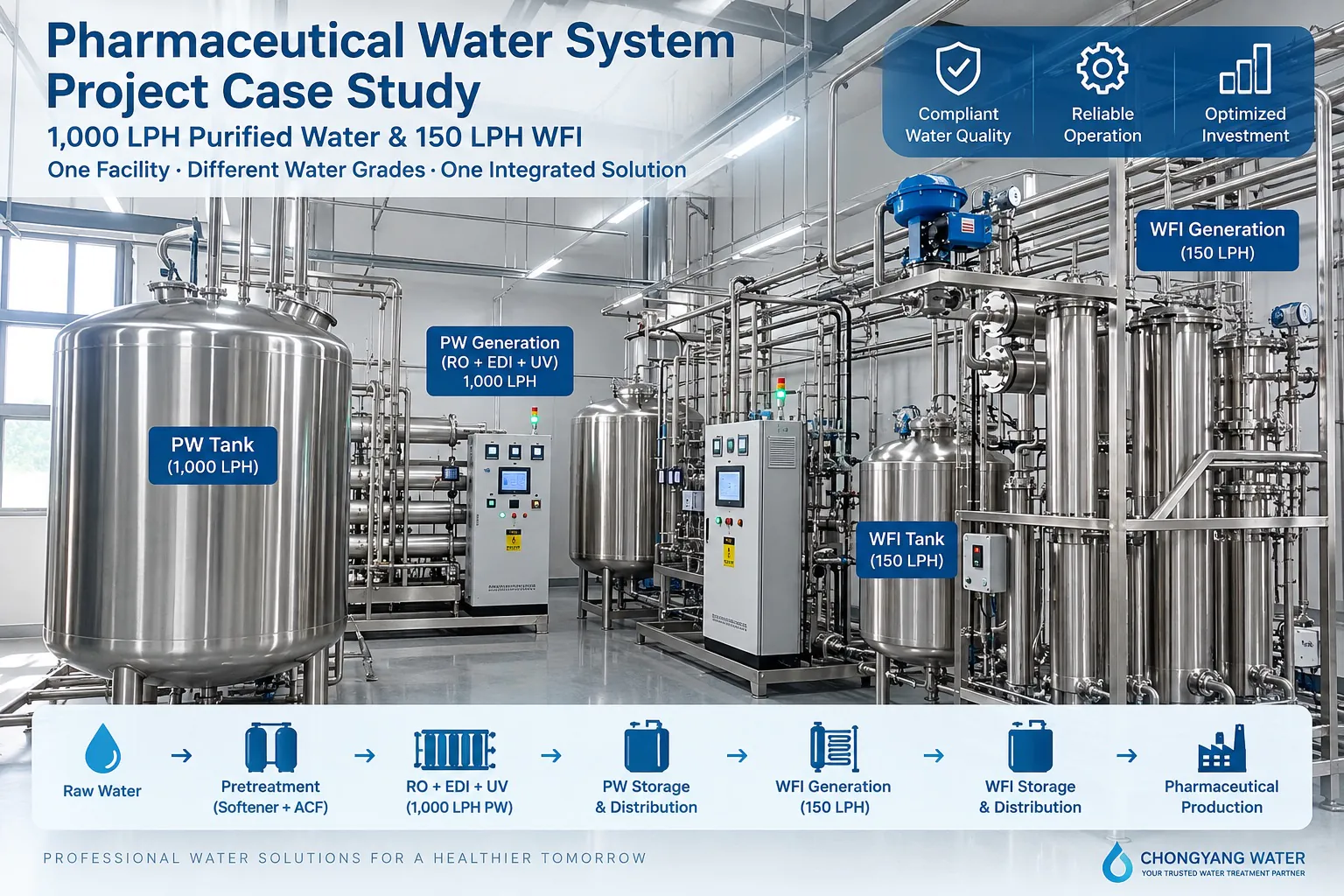
A purified water system is an integrated solution designed to produce water that meets pharmacopoeial standards such as USP, EP, and WHO. It typically includes pretreatment, reverse osmosis, and polishing units such as EDI, followed by sanitary storage and a continuously circulating distribution loop.
The system is engineered to control chemical purity, microbial levels, and consistency over time. In GMP environments, the system must also be fully validated through DQ/IQ/OQ/PQ and operated under strict monitoring and documentation.
3. Applications
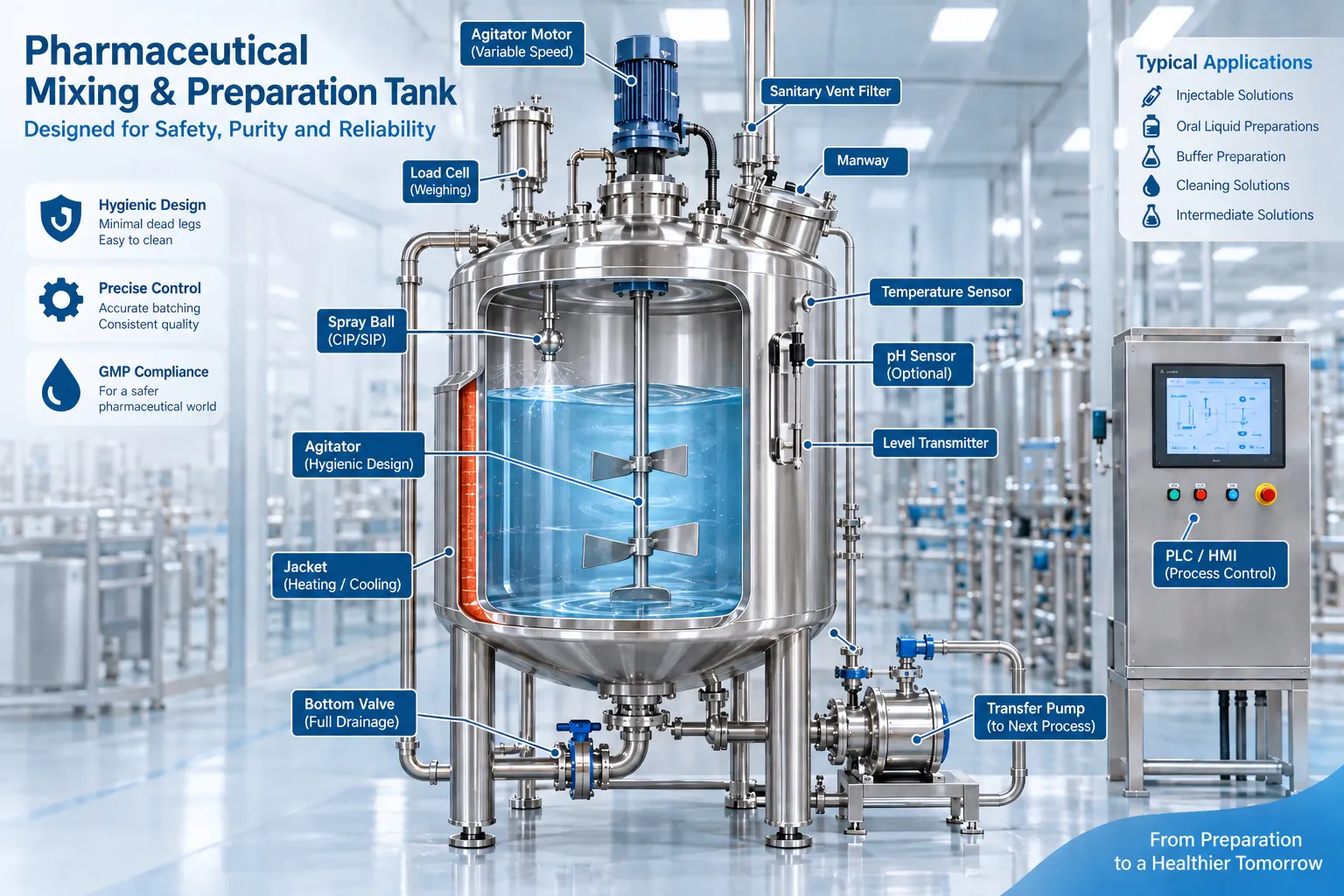
Purified water is widely used across pharmaceutical processes. It serves as a base ingredient for oral liquid formulations, syrups, and non-sterile products, and is also essential for equipment cleaning, container washing, and CIP systems.
Beyond pharmaceuticals, purified water systems are also applied in biotechnology, cosmetics, and healthcare industries, where consistent water quality is required to prevent contamination and maintain product stability.
4. Key Features
A pharmaceutical purified water system must follow strict hygienic design principles. All wetted parts are typically constructed from SS316L stainless steel, with electropolished internal surfaces Ra ≤ 0.6 µm to minimize microbial adhesion.
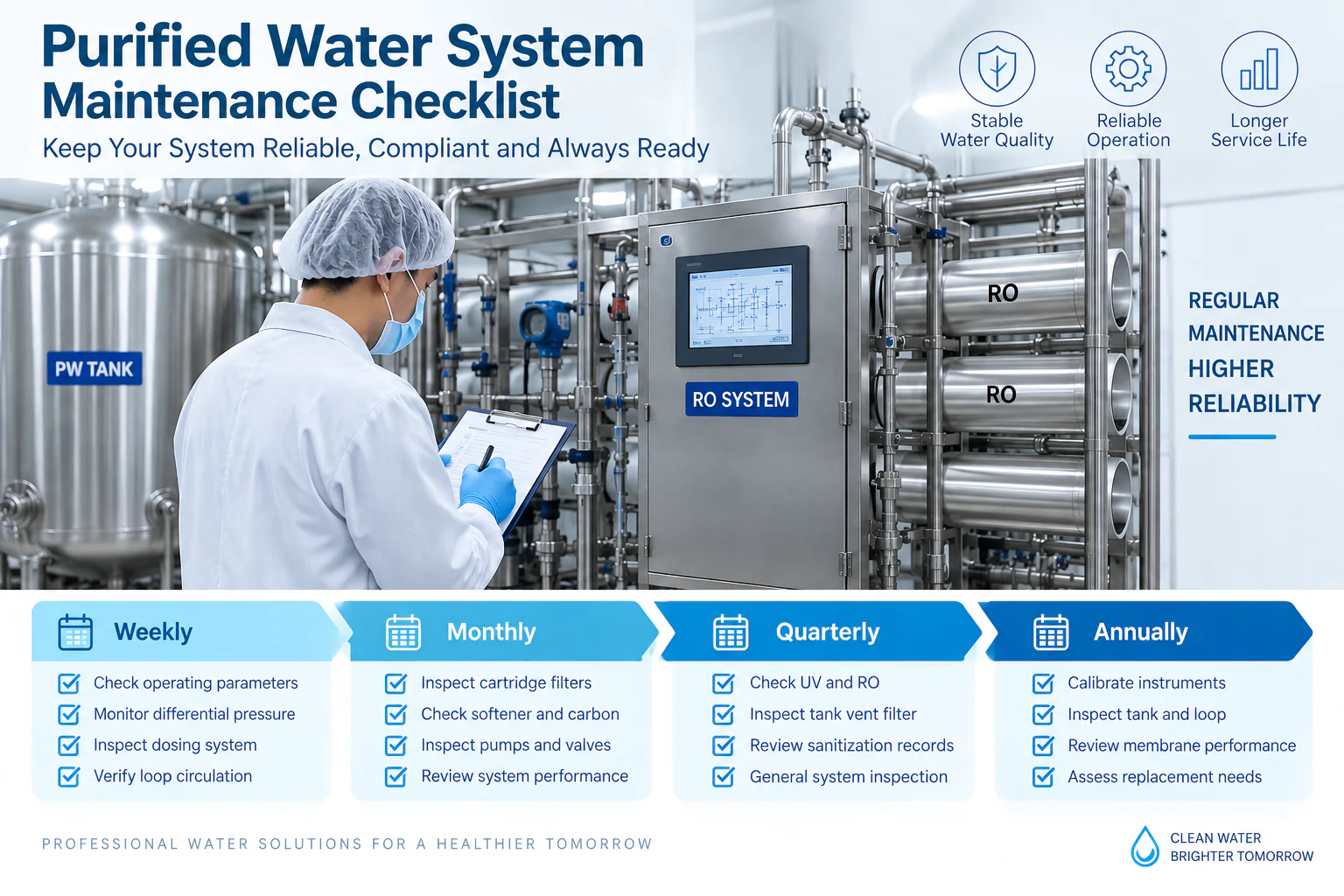
The distribution loop is designed with no dead legs ≤1.5D rule and maintains continuous circulation to prevent stagnation and biofilm formation. Systems include online instruments for conductivity, TOC, and temperature, with automated control via PLC and SCADA.
5. How It Works
The process begins with pretreatment, where suspended solids, chlorine, and hardness are removed to protect downstream equipment. Water then passes through reverse osmosis membranes, which remove dissolved salts, organics, and microorganisms.
For higher purity, a polishing stage such as EDI is used to remove residual ions without chemical regeneration. After purification, water is stored in a sanitary tank and circulated through a closed-loop distribution system.
6. Conclusion + CTA
A well-designed purified water system is essential for ensuring consistent product quality and regulatory compliance in pharmaceutical manufacturing. Its performance depends on robust design, proper material selection, effective sanitization, and continuous monitoring.
Looking for a reliable purified water system for your pharmaceutical project? We provide customized RO + EDI solutions, complete system design, and full validation support DQ/IQ/OQ/PQ. Contact us today to get a tailored solution for your application.