
Blog
How Factory Acceptance Testing (FAT) Reduces Project Risk in Pharmaceutical Water Systems
Introduction
A pharmaceutical water treatment system Keyword must deliver reliable performance, consistent water quality, and compliance with applicable GMP requirements. However, even a well-designed system may encounter installation delays, component defects, or operational problems if equipment is shipped without proper verification.
Factory Acceptance Testing (FAT) is a critical quality assurance process performed at the manufacturer's facility before equipment delivery.
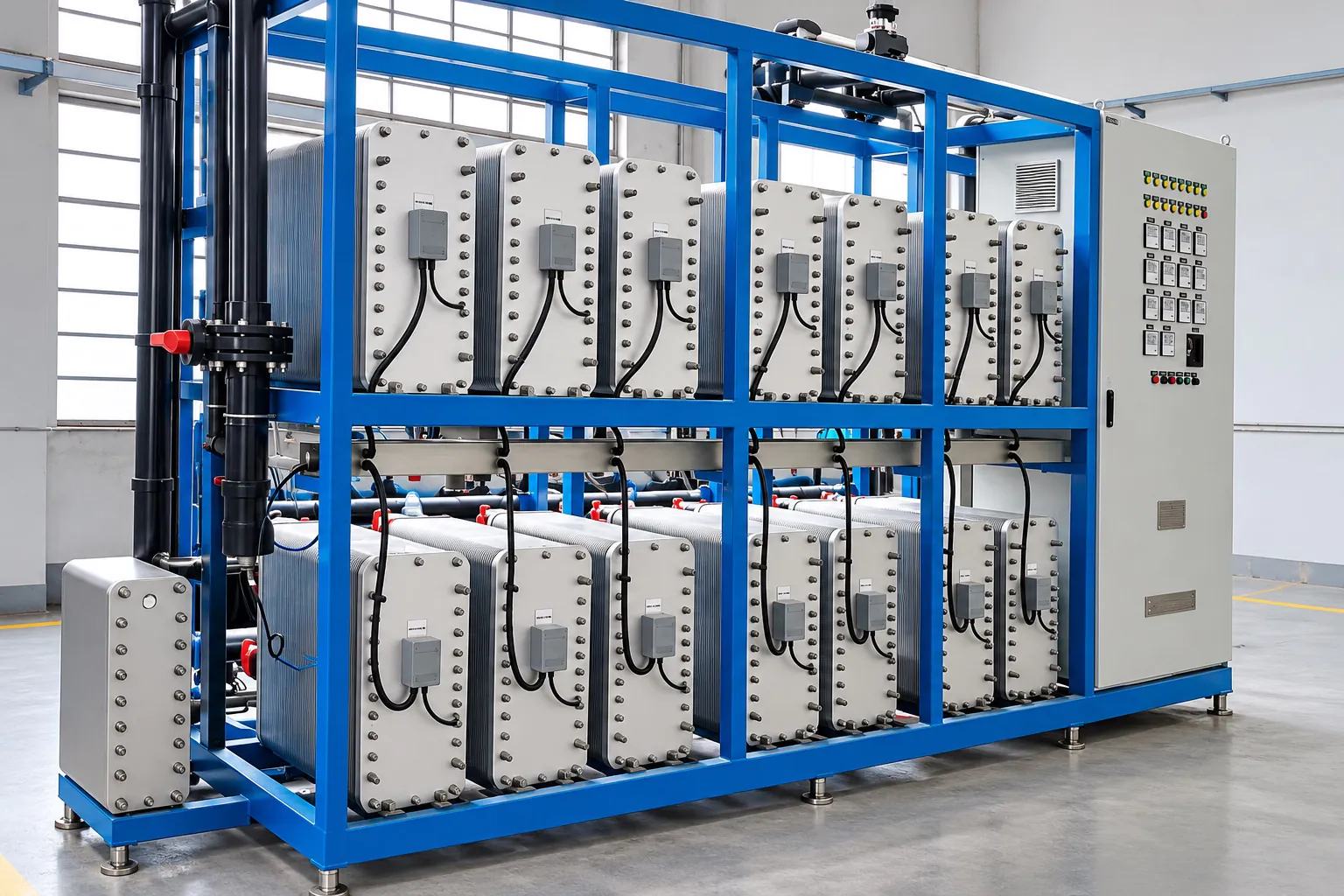
For pharmaceutical purified water systems Keyword , reverse osmosis (RO) systems, RO + EDI units, and Water for Injection (WFI) equipment Keyword , FAT helps identify technical issues early, reduce project risks, and improve installation readiness.
A comprehensive FAT covers engineering drawings, material inspection, piping integrity, pressure testing, instrumentation, automation, and operational performance.
Factory Acceptance Testing (FAT) Workflow
A structured FAT follows the equipment from engineering verification through inspection, testing, documentation, and customer acceptance.
Verification
Piping Inspection
Leakage Testing
Verification
Functional Test
Performance
& Acceptance
On mobile devices, swipe horizontally to view the complete FAT workflow.
1. Engineering Drawing and Design Verification
FAT begins with reviewing the approved engineering documentation.
Before physical inspection, the manufacturer and customer should confirm that the equipment configuration matches the agreed User Requirement Specification (URS).
Key documents include:
- Process Flow Diagram (PFD)
- Piping and Instrumentation Diagram (P&ID)
- General Arrangement (GA) drawings
- Equipment and component lists
- Electrical drawings and control architecture
- Approved technical specifications
For a GMP purified water system, particular attention should be given to equipment connections, flow direction, instrument locations, drainability, and maintenance accessibility.
Any deviation between the approved drawings and manufactured equipment should be documented and resolved.
This verification helps prevent expensive modifications during site installation.
2. Material, Piping, and Component Inspection
Material verification is particularly important for pharmaceutical water treatment equipment.
During FAT, inspectors check whether installed components comply with approved specifications and material requirements.
| Inspection Item | FAT Verification |
|---|---|
| Stainless Steel Piping | Material grade, dimensions, surface condition |
| Valves and Fittings | Type, size, connection, and material |
| RO Membrane Housings | Quantity, pressure rating, and configuration |
| Pumps | Manufacturer, model, capacity, and installation |
| Instruments | Model, measuring range, and identification |
| Material Certificates | EN 10204 3.1 and applicable traceability records |
For pharmaceutical purified water storage and distribution systems, SS316L stainless steel is commonly specified for product-contact surfaces.
Additional checks may include orbital weld quality, internal surface finish, weld documentation, and passivation records.
These inspections help prevent material mismatches, leakage risks, and future contamination concerns.
3. Hydrostatic Pressure and Leakage Testing
Hydrostatic testing verifies the mechanical integrity of pressure-containing equipment and piping.
Before testing, the manufacturer establishes the appropriate test pressure, duration, test medium, and acceptance criteria according to the approved procedure and component design limits.
The inspection typically includes:
- Filling the applicable test section with suitable water
- Removing trapped air where required
- Increasing pressure gradually to the specified level
- Holding pressure for the required duration
- Inspecting welded joints, fittings, valves, and connections
- Recording test results
No visible leakage or unacceptable pressure loss should occur under the specified acceptance conditions.
For pharmaceutical reverse osmosis systems, pressure testing may be performed separately on different piping sections according to their design pressure ratings.
Successful hydrostatic testing reduces the risk of leakage and mechanical failures during commissioning.
4. Instrument Inspection and Calibration
Accurate instrumentation is essential for controlling water quality and equipment operation.
During FAT, the manufacturer verifies instrument installation, identification, measuring range, calibration status, and signal communication.
Typical instruments include:
- Conductivity and resistivity sensors
- Pressure transmitters and gauges
- Flowmeters
- Temperature sensors
- Tank level transmitters
- Online TOC analyzers, where specified
Calibration certificates should be reviewed according to the project requirements.
Instrument signals should also be checked against the PLC/HMI system to verify correct measurement display, alarm settings, and control responses.
This is particularly important for pharmaceutical water systems requiring continuous monitoring.
5. PLC, HMI, and Automation Functional Testing
Modern pharmaceutical water treatment systems commonly use PLC and HMI automation to control operating sequences and monitor equipment conditions.
FAT verifies whether the automation system performs according to the approved functional specification.
Typical tests include:
- Automatic and manual operating modes
- Pump start/stop sequences
- Pneumatic valve operation and position feedback
- Tank level control
- Alarm and interlock functions
- Emergency stop operation
- Conductivity-based water diversion
- Data recording and communication functions
For systems requiring electronic records, applicable data integrity functions should also be tested according to the agreed scope.
Identifying software or control logic problems before shipment reduces troubleshooting time during site commissioning.
6. Operational Performance Testing
Where factory utilities and test facilities permit, the equipment should undergo an operational test using suitable test water.
For a purified water generation system, performance checks may include:
| Parameter | FAT Evaluation |
|---|---|
| Product Water Flow | Compare with specified capacity |
| Operating Pressure | Verify normal operating range |
| RO Recovery | Compare with design conditions |
| Conductivity | Record feedwater and product values |
| Pump Operation | Check vibration, noise, and performance |
| Automation | Verify automatic operating sequences |
Performance results must be evaluated against the agreed FAT acceptance criteria.
Factory testing does not automatically demonstrate final pharmaceutical water quality under actual site conditions. Full qualification and microbiological performance verification require appropriate site-based activities.
7. FAT Documentation and Customer Acceptance
A successful FAT should produce clear, traceable records.
Typical documentation includes the approved FAT protocol, inspection checklists, pressure test reports, calibration records, functional test results, deviation reports, and signed acceptance documents.
Customer representatives may attend the FAT in person or remotely.
Any outstanding items should be documented in a punch list with assigned responsibilities and closure requirements.
Important: FAT does not replace Site Acceptance Testing (SAT), Installation Qualification (IQ), Operational Qualification (OQ), or Performance Qualification (PQ). Instead, it provides documented evidence that the equipment has been inspected and tested before shipment.
Frequently Asked Questions (FAQ)
Is FAT mandatory for every pharmaceutical water system?
FAT requirements depend on the project URS, quality risk assessment, and contractual scope. It is widely used to reduce equipment delivery and commissioning risks.
What is the difference between FAT and SAT?
FAT is conducted at the manufacturer's facility before shipment, while SAT verifies equipment installation and operation at the customer's site.
Can FAT reduce project costs?
Yes. Detecting manufacturing, electrical, piping, or automation problems before shipment can reduce rework, installation delays, and unexpected commissioning expenses.
Conclusion
Factory Acceptance Testing is an essential risk-reduction activity for pharmaceutical water treatment projects.
From engineering drawing verification and material inspection to hydrostatic testing, instrument calibration, and automation checks, FAT helps ensure that equipment is ready for delivery and subsequent site qualification.
For pharmaceutical manufacturers, a well-structured FAT improves project transparency, reduces technical uncertainty, and supports smoother commissioning.
Plan Your Pharmaceutical Water System with CHONGYANG WATER
CHONGYANG WATER provides engineered pharmaceutical purified water systems, RO + EDI systems, WFI generation equipment, and sanitary storage and distribution solutions.
Our engineering team supports equipment inspection, factory testing, and agreed project documentation to help customers manage technical risks before shipment.
Contact us to discuss your pharmaceutical water treatment requirements and request a customized technical proposal.
Contact Us & Request a Quotation →More Posts