
Blog
A Complete Guide to 4Q Validation of Purified Water Systems: Understanding DQ, IQ, OQ and PQ
Introduction
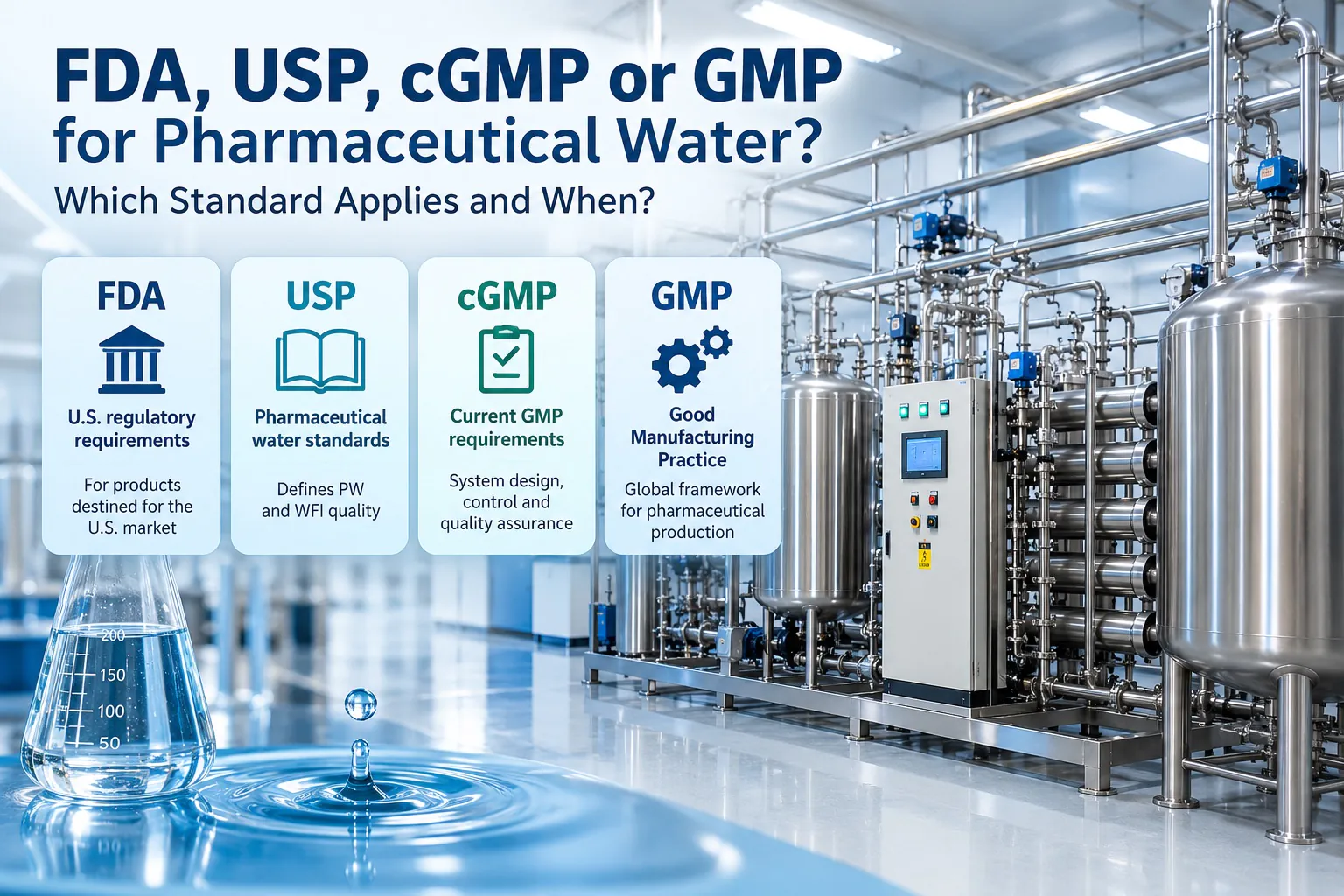
In pharmaceutical manufacturing, water is one of the most critical raw materials. Whether it is used for cleaning processes, formulation, laboratory analysis, or drug production, pharmaceutical water must consistently meet strict quality requirements defined by USP, EP, JP, WHO GMP and other regulatory guidelines.
A Purified Water System (PW System) is not simply a water treatment unit that produces clean water. It is a complete engineering system that must demonstrate reliability, repeatability and compliance throughout its lifecycle.
What Is 4Q Validation for a Purified Water System?
4Q validation is a systematic qualification process used in pharmaceutical water treatment projects to verify that the entire system complies with user requirements, engineering standards and GMP expectations.
Design Qualification
Installation Qualification
Operational Qualification
Performance Qualification
The purpose of 4Q validation is to provide documented evidence that the purified water generation system is designed correctly, installed according to approved specifications, operates within defined parameters, and continuously produces water that meets quality requirements.
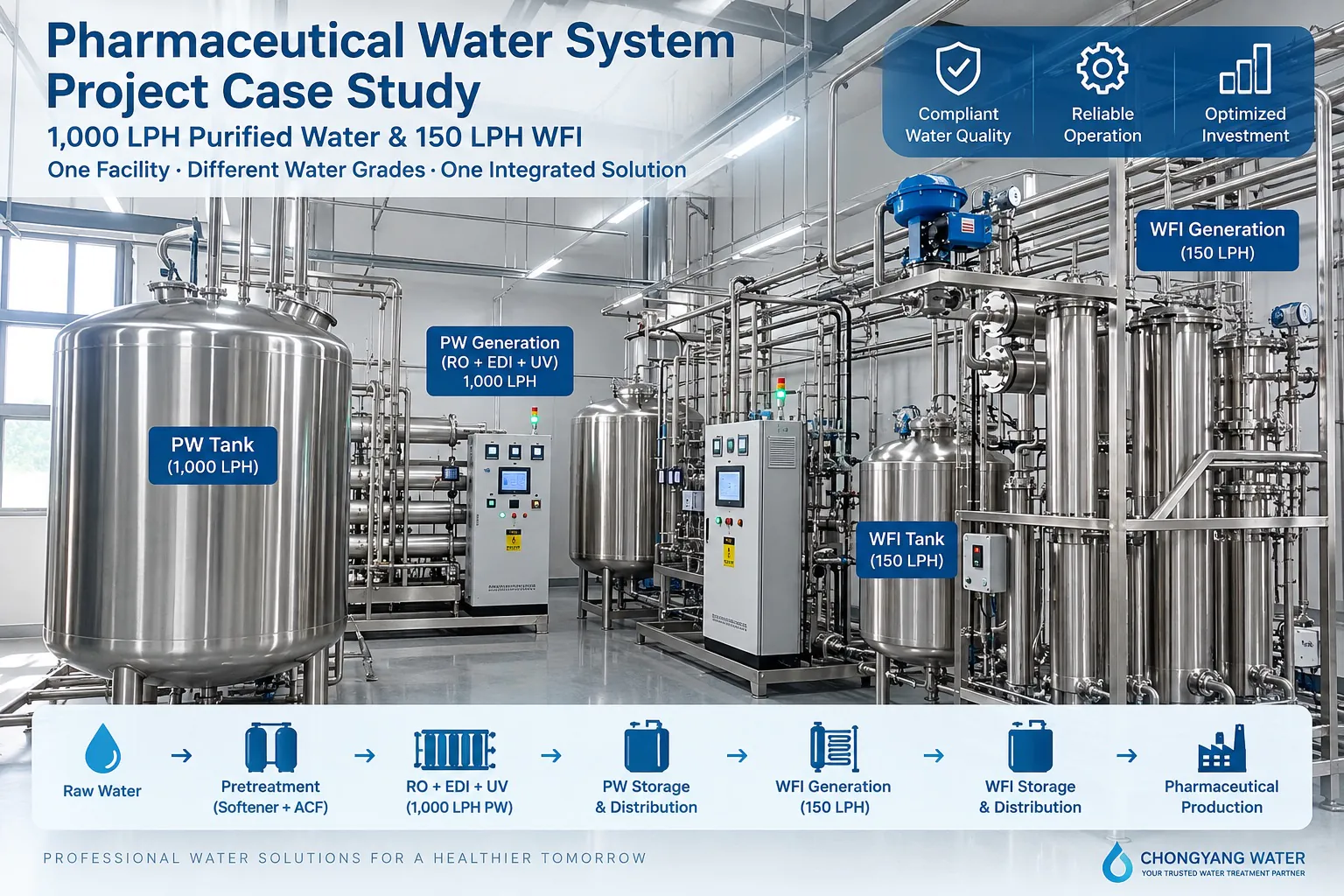
Typical Pharmaceutical Water System Configuration
A typical pharmaceutical purified water system may include:
1. DQ (Design Qualification): Confirming the System Design
What Is DQ?
Design Qualification (DQ) is the first stage of pharmaceutical water system validation.
The purpose of DQ is to confirm that the proposed system design meets:
- User Requirement Specification (URS)
- GMP requirements
- Applicable pharmacopeia standards
- Production capacity requirements
- Water quality specifications
Is the designed purified water system suitable for its intended pharmaceutical application?
Key Activities During DQ
1. Process Design Review
The engineering team evaluates whether the selected treatment technology can achieve the required water quality.
Example:
Typical performance targets may include:
- Conductivity control
- Low Total Organic Carbon (TOC)
- Controlled microbial level
2. IQ (Installation Qualification): Verifying Correct Installation
What Is IQ?
Installation Qualification (IQ) confirms that the purified water system has been installed according to approved engineering documents, manufacturer specifications, and GMP requirements.
"Was the pharmaceutical water system installed correctly?"
Main Activities During IQ
1. Equipment Verification
Engineers verify that all major components match the approved technical specifications and equipment list.
- RO membrane model and quantity
- High-pressure pump model and material
- UV sterilizer capacity
- EDI module specifications
- Storage tank volume
- Valve types
- Instrument models
2. Piping and Mechanical Inspection
The installation inspection focuses on hygienic design and mechanical integrity, especially for pharmaceutical water distribution systems.
- SS316L pipeline verification
- Orbital welding quality inspection
- Weld log review
- Passivation records
- Pressure testing reports
- Drainage slope inspection
- Continuous circulation design
- Proper return line configuration
- Minimized dead legs
- Sanitary connection methods
3. Instrument Calibration Verification
All critical instruments must have valid calibration certificates before system operation.
| Instrument | Purpose |
|---|---|
| Conductivity Sensor | Monitor purified water quality |
| Pressure Transmitter | Monitor system pressure |
| Temperature Sensor | Verify sanitization temperature |
| Flow Meter | Confirm circulation and production flow |
| TOC Analyzer | Monitor organic contamination |
4. Document Review
Typical IQ documentation includes:
- Equipment manuals
- Electrical drawings
- Calibration certificates
- Material certificates
- Welding records
- Factory acceptance test reports
3. OQ (Operational Qualification): Confirming System Operation
What Is OQ?
Operational Qualification (OQ) verifies that the purified water system operates according to approved design specifications and operating parameters.
"Does the system function correctly under controlled operating conditions?"
Main Activities During OQ
1. Functional Testing
Engineers test all automatic and safety functions, including:
- Automatic startup and shutdown
- Pump interlocks
- Alarm functions
- Safety protection
- Valve operation
- HMI control functions
If RO feed pressure is below the required level, the PLC automatically stops the high-pressure pump and generates an alarm.
2. Process Parameter Verification
Critical operating parameters are tested during OQ qualification.
| Parameter | Typical Verification |
|---|---|
| RO Pressure | Check operating range |
| Flow Rate | Confirm design capacity |
| Conductivity | Verify online monitoring |
| Temperature | Confirm control accuracy |
| UV Intensity | Verify sterilization performance |
| Ozone Concentration | Confirm sanitization level |
3. Sanitization Testing
Modern pharmaceutical water systems use different sanitization technologies to control microbial contamination.
Hot Water Sanitization
The distribution loop is heated above 80°C to reduce microbial contamination.
Ozone Sanitization
Ozone is generated and circulated through the purified water tank and distribution loop.
Chemical Sanitization
Used when compatible with system materials and process requirements.
4. PQ (Performance Qualification): Proving Long-Term Performance
What Is PQ?
Performance Qualification (PQ) is the final stage of the 4Q validation process.
PQ verifies that the purified water system can continuously produce pharmaceutical-grade water under normal production conditions.
"Can the system consistently produce qualified water over time?"
Main Activities During PQ
1. Water Quality Monitoring
During PQ qualification, purified water samples are collected from different critical points of the system.
- Purified water storage tank outlet
- Distribution return line
- Points of use (POU)
Typical testing parameters include:
| Testing Item | Purpose |
|---|---|
| Conductivity | Verify ionic purity of purified water |
| TOC | Monitor organic contamination level |
| Microbial Count | Evaluate microbiological control |
| Endotoxin | Required for WFI related applications |
| Chemical Contamination | Confirm chemical compliance |
2. Sampling Plan Execution
A PQ study may continue for several days, weeks, or even months depending on regulatory requirements and project specifications.
To prove that the GMP purified water system remains stable, reliable, and capable of continuous operation.
3. Trend Analysis
The validation team evaluates long-term system performance through continuous data review.
- Water quality consistency
- Microbial trend control
- System recovery performance
- Sanitization effectiveness
A properly designed GMP water system should demonstrate stable operation without unexpected contamination events.
Why 4Q Validation Is Critical for Pharmaceutical Water Systems
A validated purified water system provides strong technical support for pharmaceutical manufacturing compliance and reliable production.
Regulatory Compliance
4Q validation supports compliance with:
- GMP requirements
- FDA expectations
- USP standards
- European Pharmacopoeia
Reliable Production
A qualified water system reduces risks related to:
- Production interruption
- Water contamination
- Batch rejection
- Regulatory observations
Lifecycle Management
Validation documents support:
- Preventive maintenance
- System modification
- Performance monitoring
- Future expansion
Applications of Validated Purified Water Systems
4Q validated pharmaceutical water systems are widely applied in industries where high-quality process water is required.
Pharmaceutical Manufacturing
- Oral solid dosage production
- Injectable drug manufacturing
- Vaccine production
- Biotechnology processes
Medical & Healthcare
- Hospital pharmaceutical preparation
- Dialysis water systems
- Laboratory water supply
Cosmetics Industry
- Cream production
- Lotion manufacturing
- Premium cosmetic formulation
Conclusion
The 4Q validation process is the foundation of a reliable and compliant pharmaceutical purified water system.
From Design Qualification (DQ) to Installation Qualification (IQ), Operational Qualification (OQ), and Performance Qualification (PQ), every stage provides documented evidence that the system meets pharmaceutical engineering requirements.
A successful GMP water system requires more than achieving water quality targets. It requires hygienic design, proper material selection, accurate instrumentation, automation control, and long-term operational stability.
Need a GMP Purified Water System Solution?
Our engineering team provides complete pharmaceutical water solutions, including purified water generation systems, RO + EDI systems, storage & distribution loops, validation documents, DQ/IQ/OQ/PQ support, FAT and SAT services.
Contact Our Engineering TeamMore Posts