
Blog
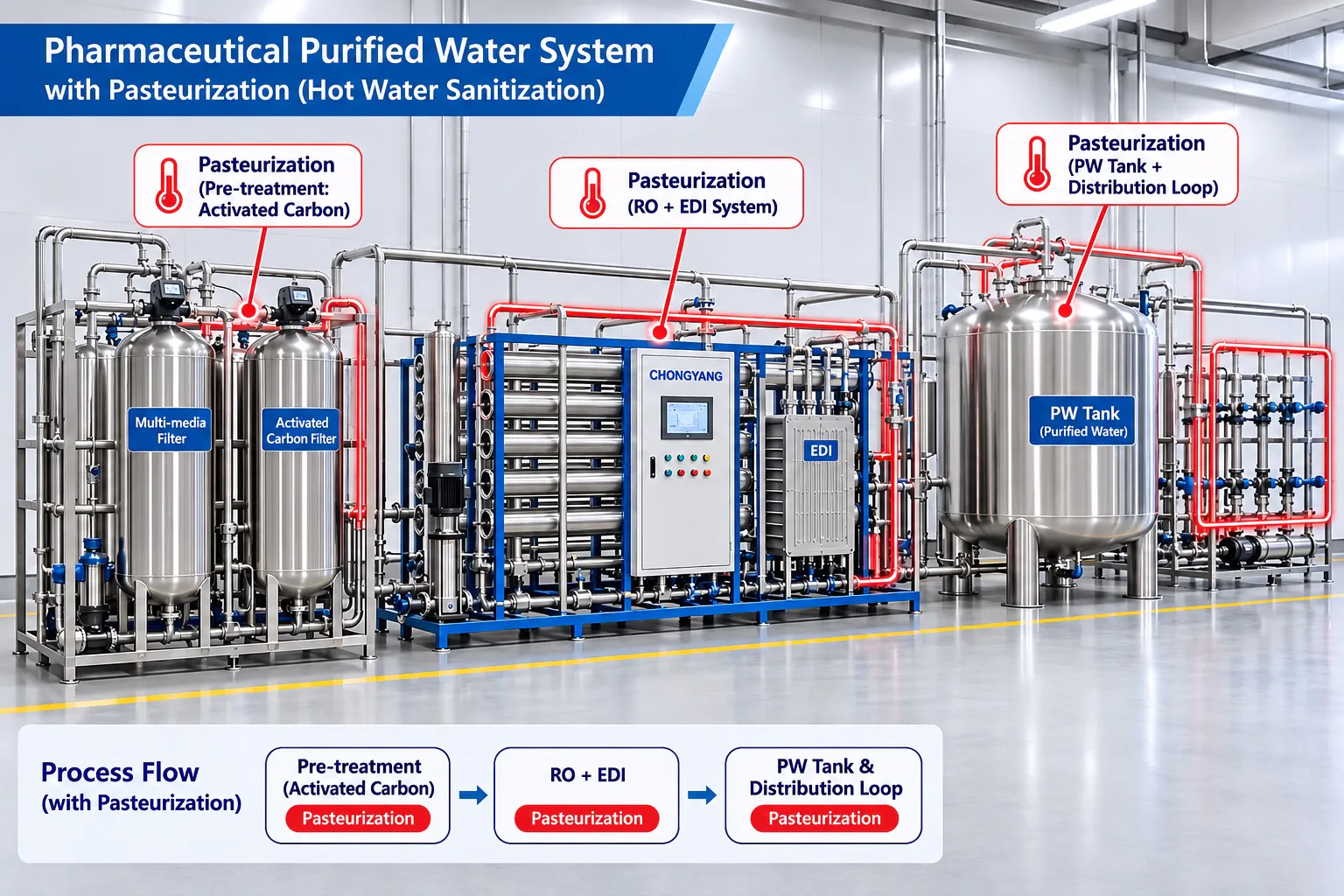
What Is Pasteurization in a Pharmaceutical Purified Water System?
Introduction
Microbial control is essential for maintaining water quality in a pharmaceutical purified water system. Over time, microorganisms may develop biofilms inside storage tanks, pipelines, and distribution loops.
Pasteurization, also known as hot water sanitization, is a thermal treatment method used to reduce microbial contamination without routine chemical disinfectants.
1. What Is Pasteurization?
Pasteurization involves circulating heated water through a purified water system to reduce microbial populations and control biofilm formation.
In pharmaceutical applications, hot water sanitization is commonly performed at approximately 80°C, although the actual temperature and holding time depend on the system design and validated sanitization procedure.
Unlike sterilization, pasteurization does not guarantee the elimination of all microorganisms or bacterial spores.
2. When Is Pasteurization Required?
Hot water sanitization may be performed under several operating conditions:
- Routine sanitization: Scheduled microbial control during normal operation.
- Microbial excursions: When monitoring results exceed established alert or action limits.
- After maintenance: Following pipeline modifications, component replacement, or system opening.
- Before commissioning: As part of startup and qualification activities.
- After extended shutdown: Before returning the system to normal operation.
The sanitization strategy should be established through microbial monitoring, risk assessment, and GMP requirements.
3. Utility Requirements for Hot Water Sanitization
A pharmaceutical purified water system requires suitable utilities and heat-resistant components for thermal sanitization.
| Utility / Component | Engineering Requirement |
|---|---|
| Heating Source | Clean steam, plant steam through a suitable heat exchanger, or electric heating |
| Heat Exchanger | Adequate heating capacity and hygienic design |
| Circulation Pump | Suitable for the specified sanitization temperature |
| Piping and Valves | Temperature-compatible materials and seals |
| Temperature Sensors | Monitoring at critical locations and return line |
| PLC/HMI | Automatic temperature control, alarms, and cycle recording |
The system must maintain adequate circulation and achieve the required temperature throughout the validated sanitization circuit.
Important Engineering Note: Conventional RO membranes and EDI modules may not withstand 80°C. Only components specifically rated for thermal sanitization should be exposed to the cycle.
4. What Is the Pasteurization Process?
A typical purified water storage and distribution loop follows this sequence:
Typical Hot Water Sanitization Circuit
Tank
Pump
Exchanger
Loop
Line
Tank
On mobile devices, swipe horizontally to view the complete process flow.
The sanitization cycle generally includes five stages:
- Preparation: Confirm system readiness, valve positions, and operating conditions.
- Heating: Gradually raise the circulating water temperature.
- Holding: Maintain the validated temperature for the specified duration.
- Cooling: Reduce the water temperature under controlled conditions.
- Return to Service: Verify required operating parameters before resuming production.
Temperature monitoring at the coldest qualified location is important for confirming effective heat exposure.
5. How Often and How Long Should Pasteurization Be Performed?
There is no universal GMP requirement specifying one fixed sanitization frequency or holding time for every purified water system.
Typical engineering practices may include:
| Parameter | Illustrative Practice |
|---|---|
| Sanitization Temperature | Approximately 80°C |
| Holding Time | 30–60 minutes after the required temperature is achieved |
| Frequency | Weekly or according to microbial monitoring trends |
| Total Cycle Duration | Depends on heating, holding, and cooling requirements |
Engineering Reference: These values are examples, not universal acceptance criteria.
The final sanitization interval and duration must be established through system qualification, microbial trending, and a documented risk assessment.
Frequently Asked Questions (FAQ)
Can RO and EDI systems be pasteurized?
Only if the selected membranes, EDI modules, piping, and associated components are rated for the specified sanitization conditions.
Does pasteurization replace microbial testing?
No. Routine microbiological monitoring remains necessary to verify ongoing water quality control.
Conclusion
Hot water sanitization is an effective microbial control strategy for properly designed pharmaceutical purified water storage and distribution systems.
Successful pasteurization depends on suitable heating utilities, hygienic piping design, temperature monitoring, and validated operating procedures.
Need a Purified Water System with Hot Water Sanitization?
CHONGYANG WATER designs pharmaceutical purified water systems with customized storage tanks, distribution loops, heat exchangers, PLC/HMI controls, and automated thermal sanitization options.
Contact our engineering team to discuss your water quality requirements and sanitization strategy.
Contact Us & Request a Technical Proposal →More Posts