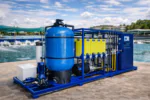
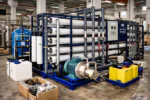
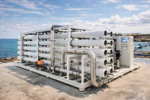
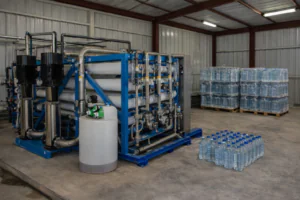
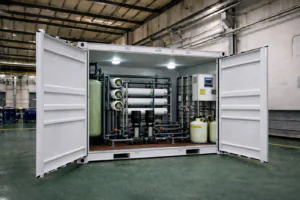
Seawater Reverse Osmosis (SWRO) Desalination System
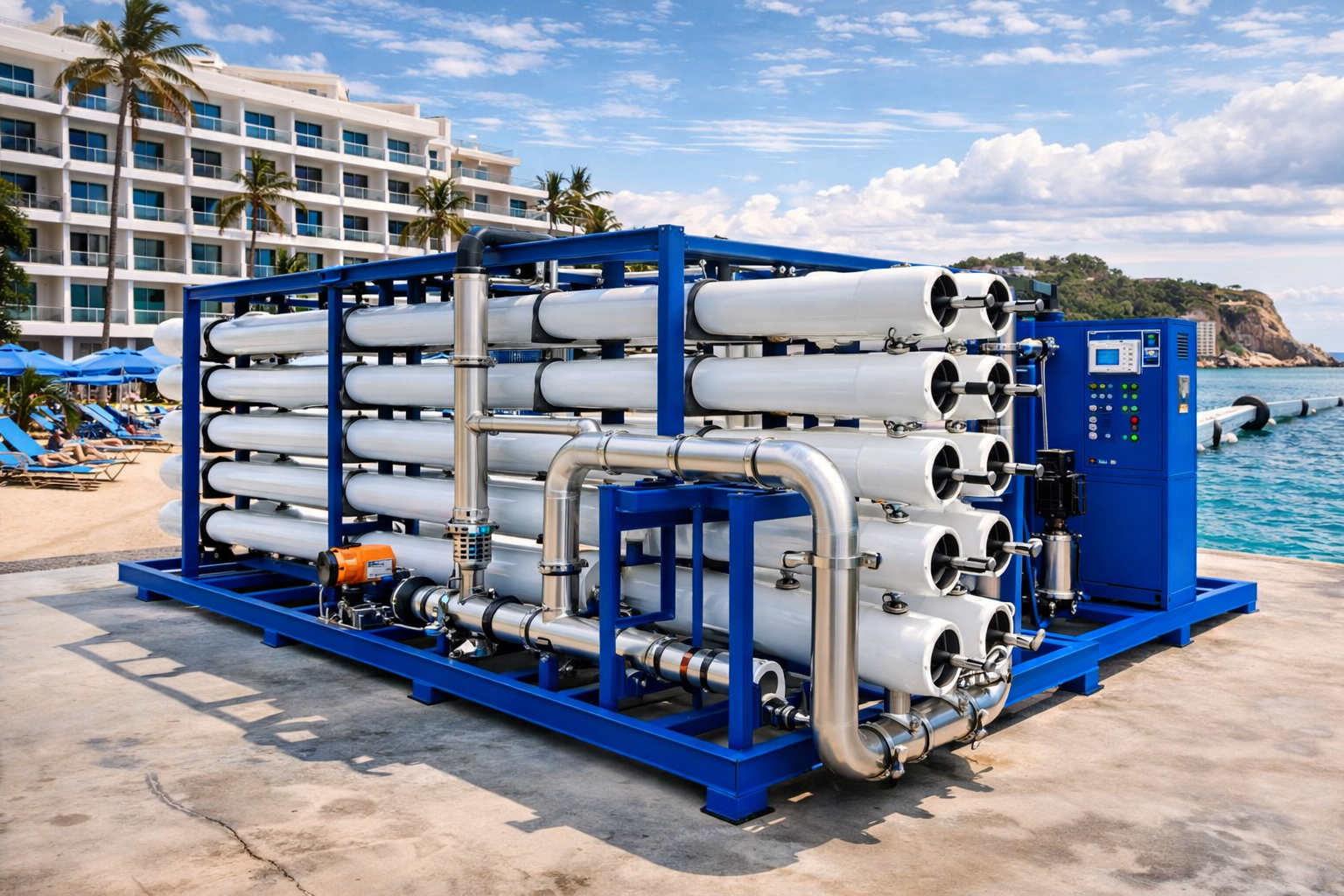
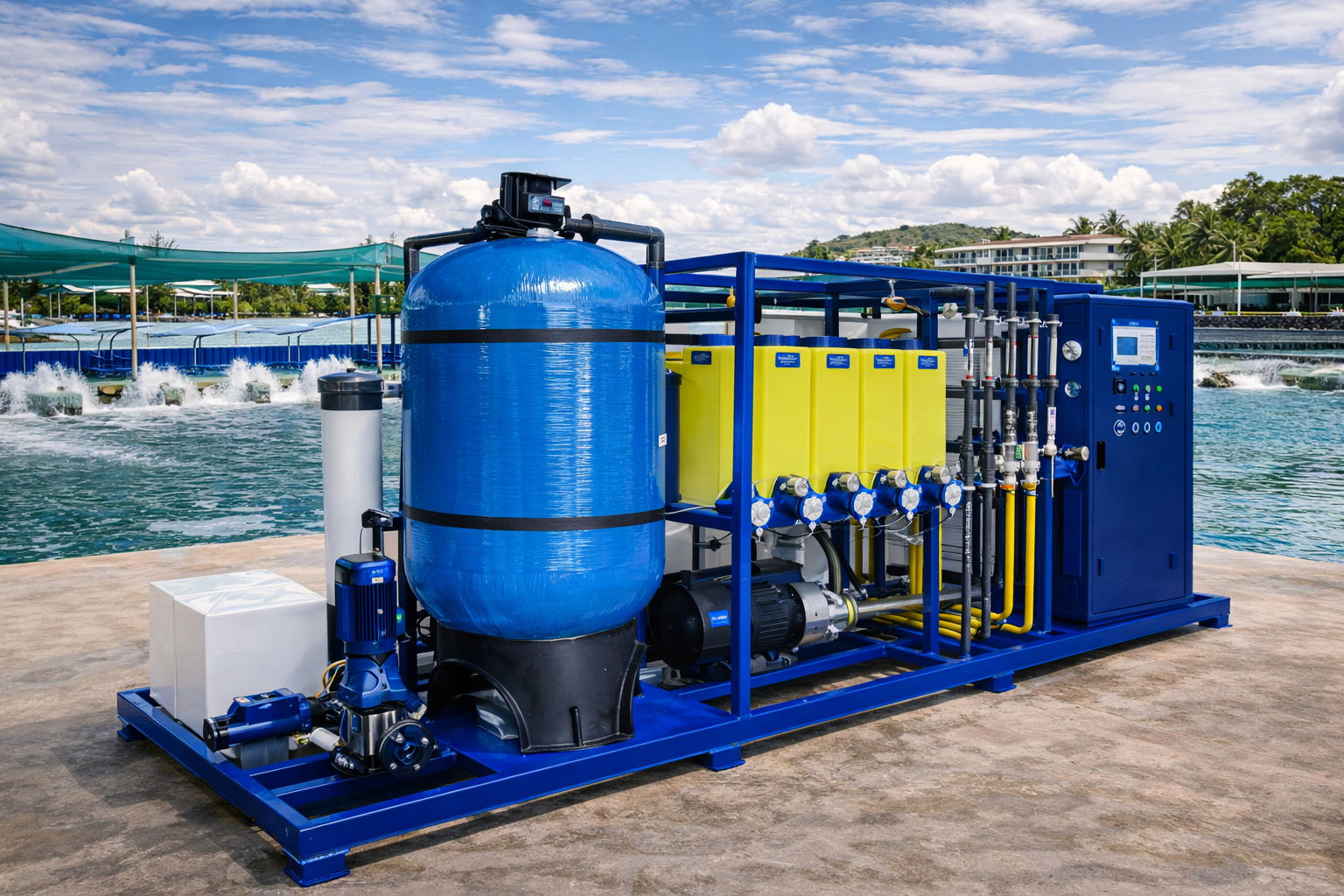
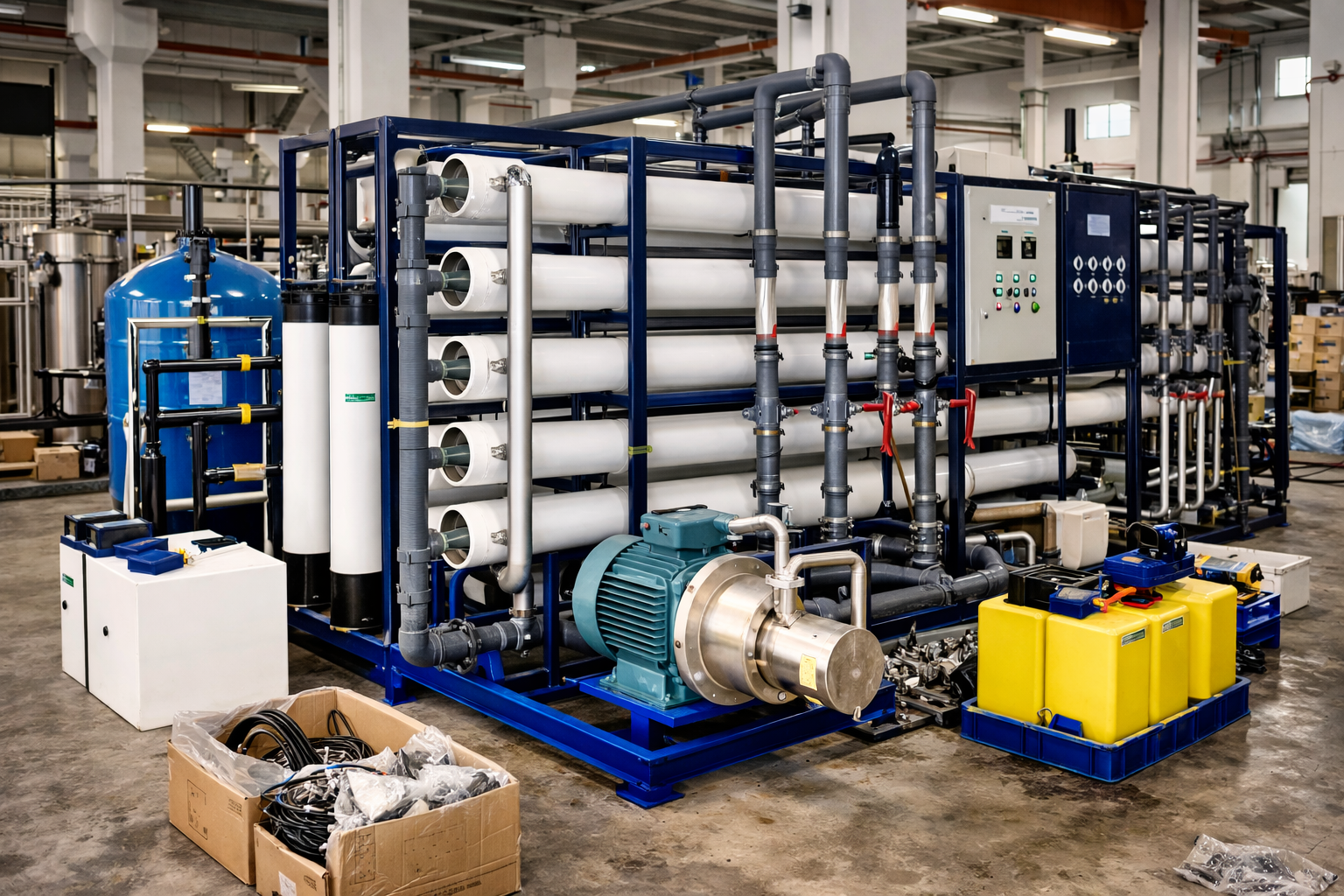
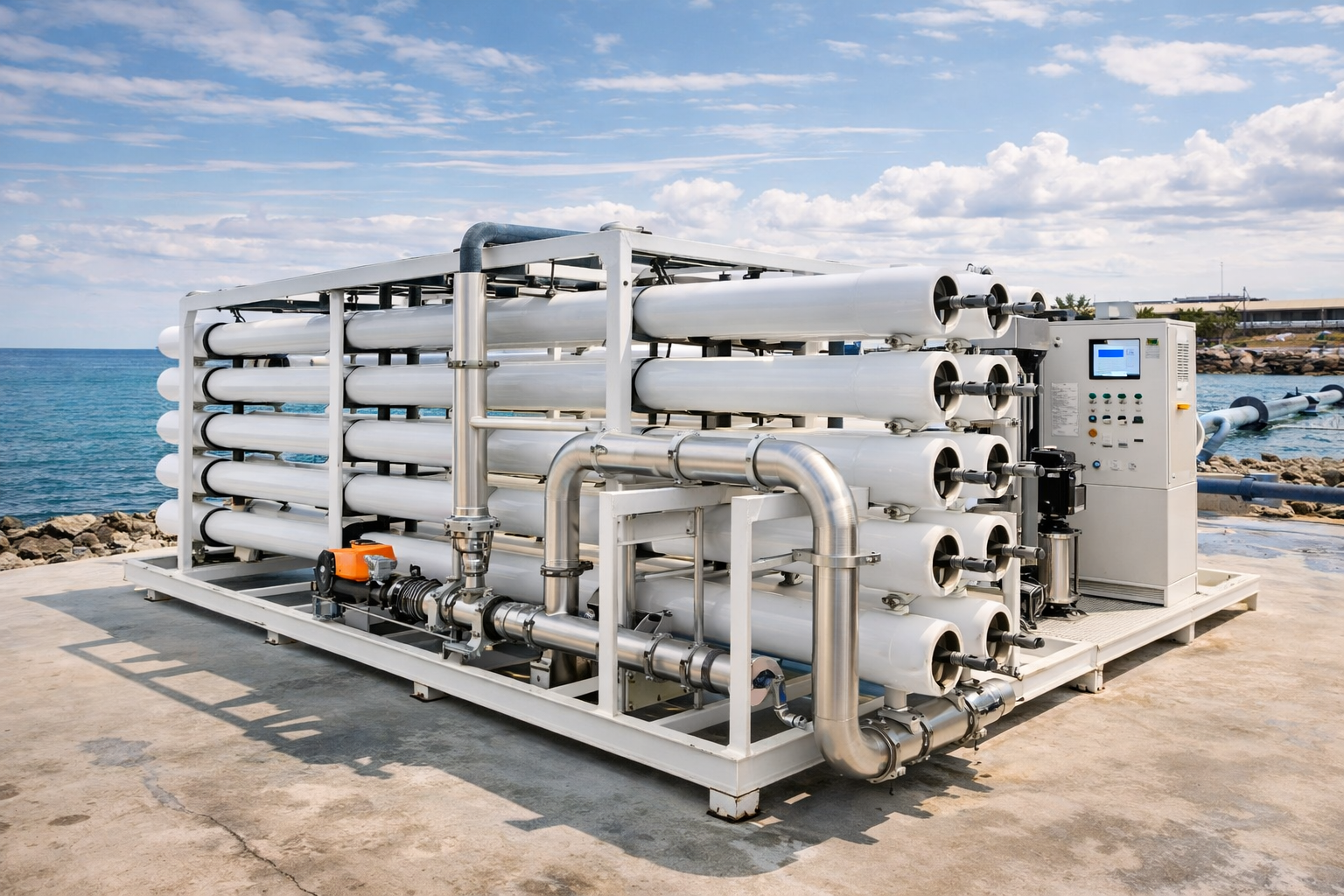
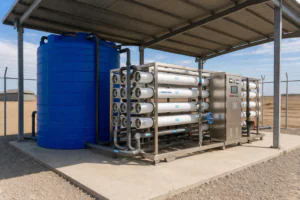
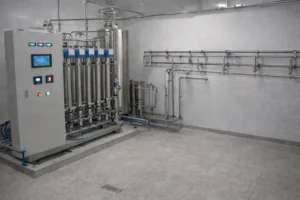
A Seawater Reverse Osmosis (SWRO) Desalination System converts seawater into fresh usable water through high-pressure membrane separation technology.
CHONGYANG WATER provides customized SWRO desalination systems for coastal cities, islands, resorts, offshore platforms, power plants, mining operations, municipalities, and industrial facilities.
What Is a SWRO Desalination System?
A SWRO system removes dissolved salts and impurities from seawater by applying high pressure to specialized seawater RO membranes. It is suitable for seawater with high TDS levels, typically around 35,000–45,000 ppm.
- Seawater Intake System
- Pretreatment System
- Ultrafiltration System
- Chemical Dosing System
- High-Pressure Pump
- SWRO Membrane System
- Energy Recovery Device
- Post-Treatment System
- PLC / SCADA Control System
Technical Specifications
Product Water Quality
| Parameter |
Typical Value |
| Feed Water TDS |
35,000 – 45,000 ppm |
| Product Water TDS |
< 500 ppm |
| Salt Rejection |
≥ 99.5% |
| Turbidity |
< 0.5 NTU |
| Bacteria Removal |
> 99.99% |
| Virus Removal |
> 99.9% |
| Recovery Rate |
35% – 50% |
System Specifications
| Parameter |
Specification |
| Capacity Range |
1 m³/day – 20,000 m³/day |
| Feed Water Source |
Seawater |
| RO Membrane Type |
Seawater RO Membrane |
| Operating Pressure |
55 – 80 Bar |
| Pretreatment |
MMF + UF |
| Energy Recovery Device |
Optional / Recommended |
| Control System |
PLC + HMI / SCADA |
| Installation Type |
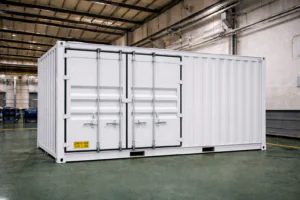
Skid Mounted / Containerized |
Features & Advantages
High Salt Removal Efficiency
Reliable Freshwater Production
Advanced Energy Recovery
Fully Automated Operation
Modular System Design
Low Chemical Consumption
Compact Footprint
Flexible Installation Options
Application Industries
Municipal Water Supply
Island Water Supply
Resorts & Hotels
Offshore Platforms
Mining Industry
Power Plants
Industrial Manufacturing
Emergency Water Projects
Production Process
This multi-stage process ensures stable freshwater production while maximizing membrane life and system efficiency.
Seawater Intake
→
Raw Water Pump
→
Multi-Media Filter
→
Ultrafiltration
→
Chemical Dosing
→
5 μm Cartridge Filter
→
High Pressure Pump
→
SWRO Membrane System
→
Energy Recovery Device
→
Product Water Tank
→
Remineralization
→
UV / Chlorination
→
Fresh Water Distribution
Looking for a Reliable SWRO Desalination System?
CHONGYANG WATER provides complete seawater reverse osmosis desalination solutions for municipalities, islands, resorts, offshore platforms, mining projects, industrial facilities, and coastal communities.
Contact our engineering team to receive seawater analysis, customized process design, energy consumption calculation, P&ID drawings, layout drawings, technical proposals, and competitive quotations.
Contact Us