How Does a Purified Water System Work?
Pharmaceutical purified water is a critical ingredient in drug manufacturing. Its production relies on a sophisticated and validated system to ensure it meets strict quality standards.
The Journey of Water: A Step-by-Step Process
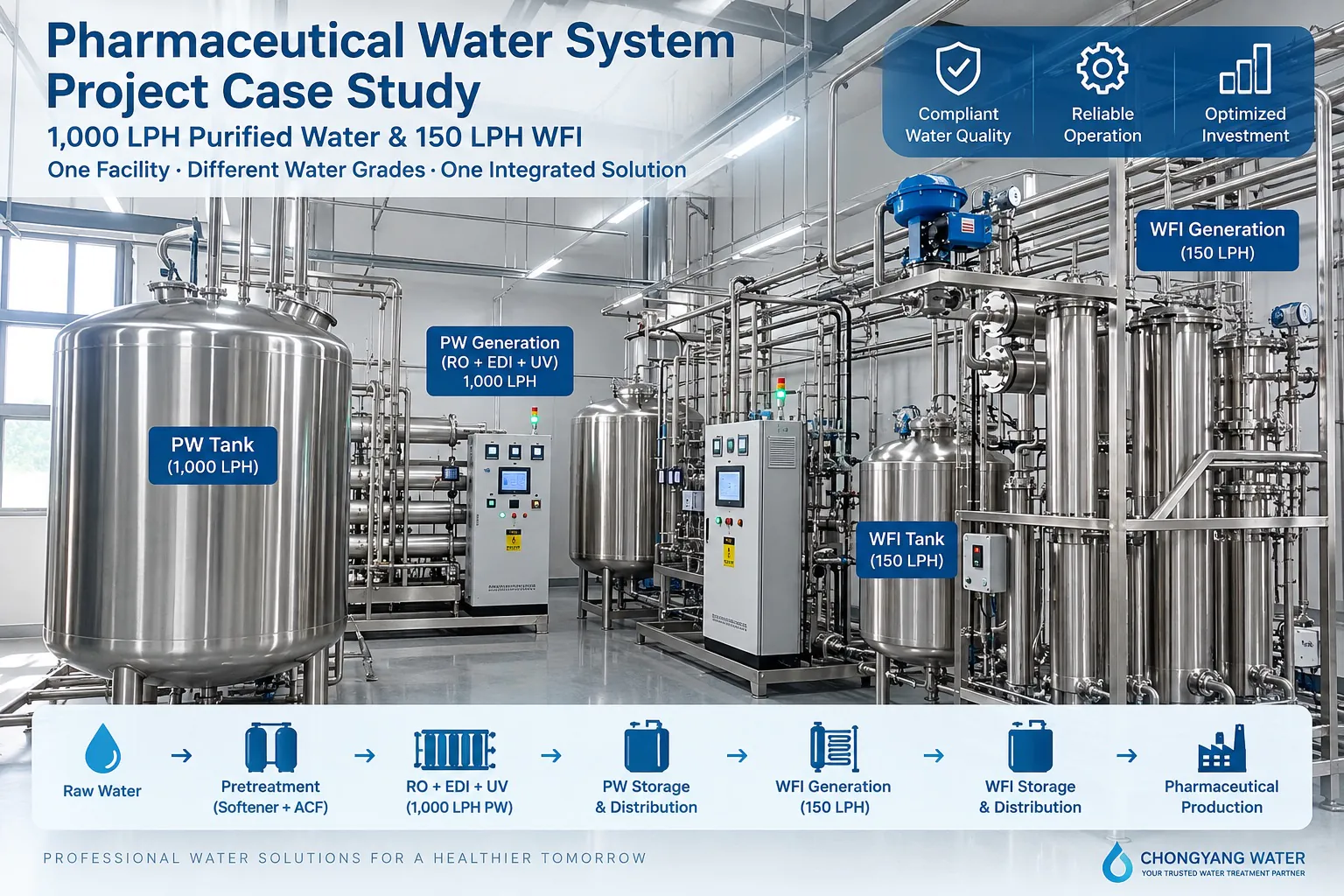
The system works by removing impurities step-by-step. Here is a simplified process flow:
1. Pretreatment: The First Line of Defense
This stage protects the main system.
- Multi-media Filters: Remove sand, rust, and suspended solids.
- Carbon Filters: Adsorb chlorine and organic compounds, protecting the Reverse Osmosis membrane.
- Water Softener: Removes calcium and magnesium ions to prevent scaling.
2. Primary Purification: The Heart of the System
This is where most impurities are removed.
- Reverse Osmosis: High-pressure water passes through a semi-permeable membrane, removing over 99% of dissolved salts, bacteria, and organic compounds.
3. Polishing: Achieving Ultimate Purity
This final step ensures the highest quality.
- Electrodeionization: A chemical-free process using electricity to remove residual ions. Alternatively, Mixed-Bed Ion Exchange can be used.
- The Polishing Loop: Water is stored and continuously circulated through a loop with UV sterilization and filtration.
Beyond Technology: Ensuring Quality and Compliance
A reliable system requires more than just equipment.
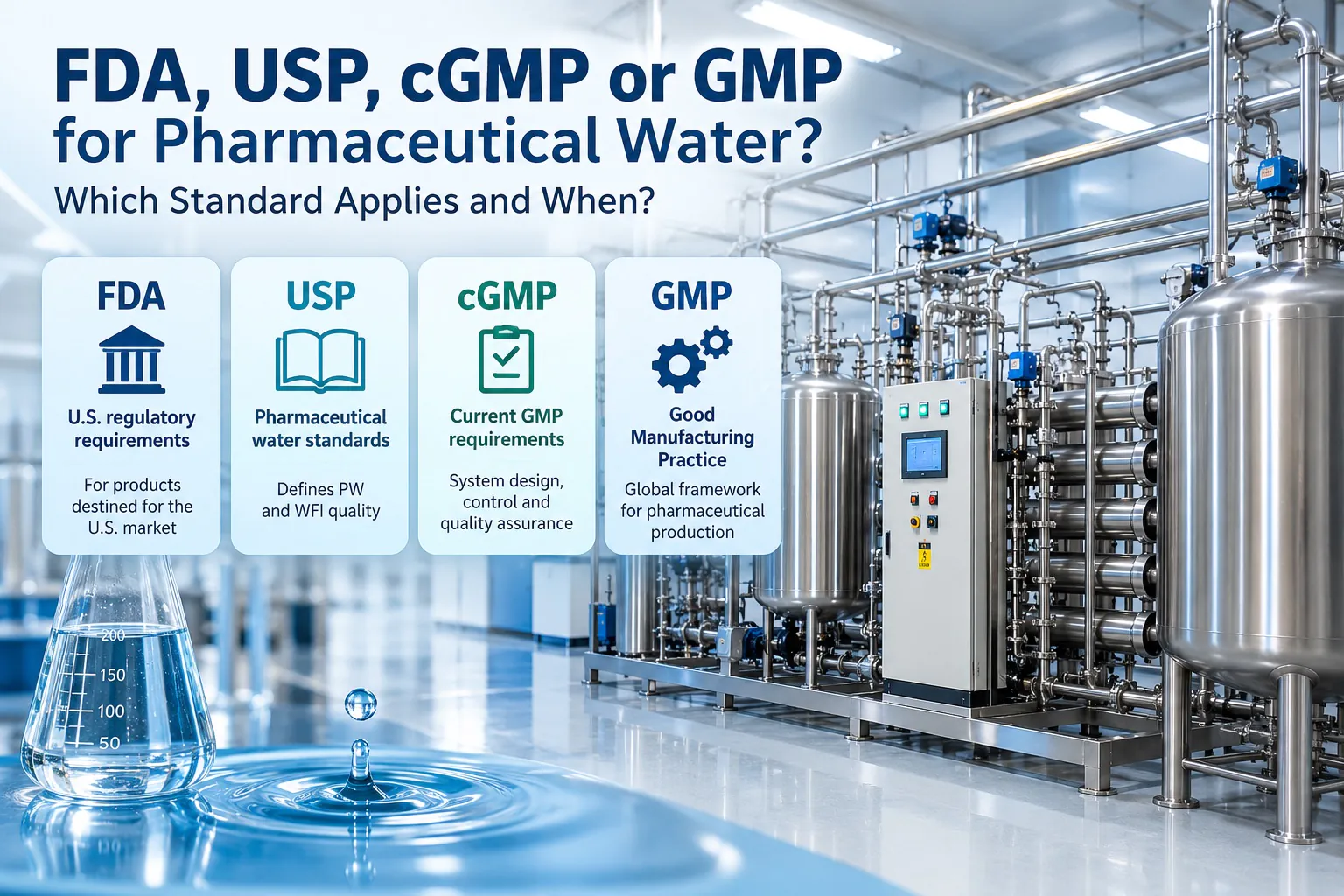
- Water System Validation: For GMP compliance, systems must pass DQ, IQ, OQ, and PQ to prove consistent performance.
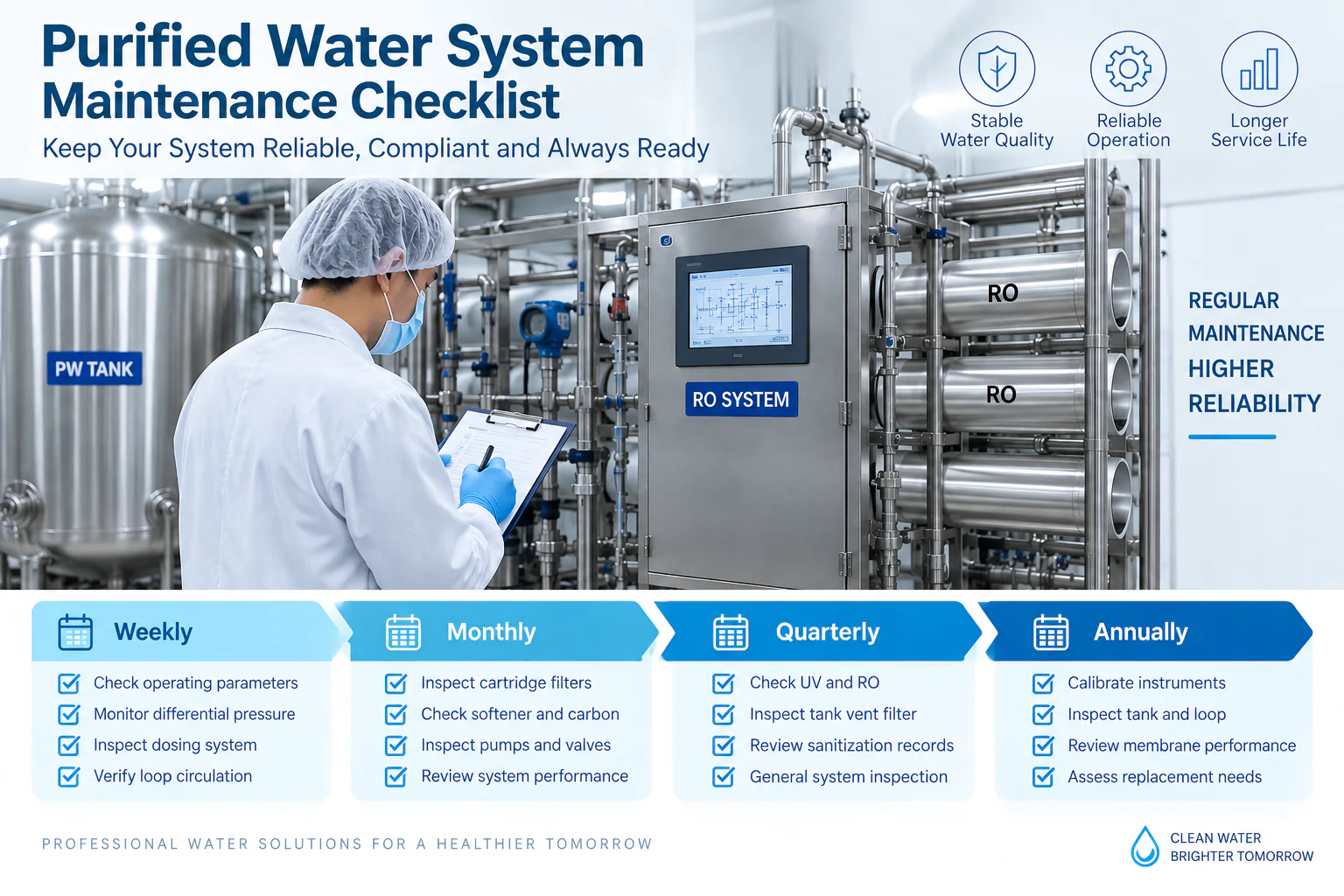
- Continuous Monitoring: Water quality is monitored for conductivity, TOC, and other key parameters.
In summary, a purified water system is a multi-barrier process combining filtration, membrane separation, and polishing technologies to ensure safe and reliable high-purity water production.