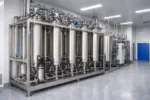
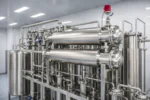
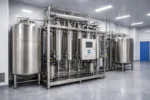
Multi-Effect-Distiller
♦ Main Application:
Applications: Water for Injection (WFI) production for pharmaceutical, biotechnology, vaccine and sterile manufacturing facilities.
Technology: Multi-effect thermal distillation with vapor separation and heat recovery.
Standards: Designed to support applicable USP / EP / JP WFI requirements and GMP-oriented engineering.
Multi-Effect Distiller for Pharmaceutical WFI Production
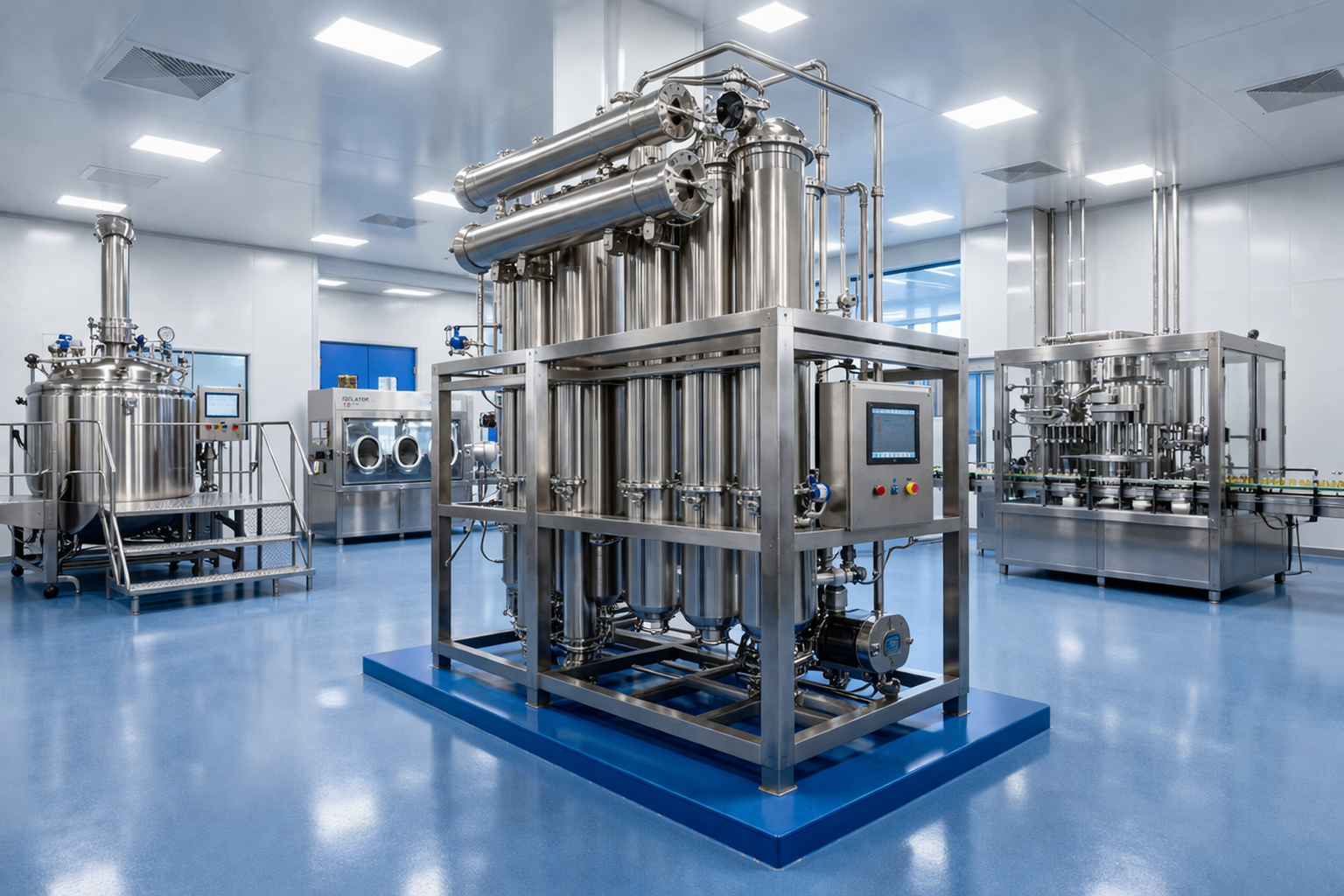
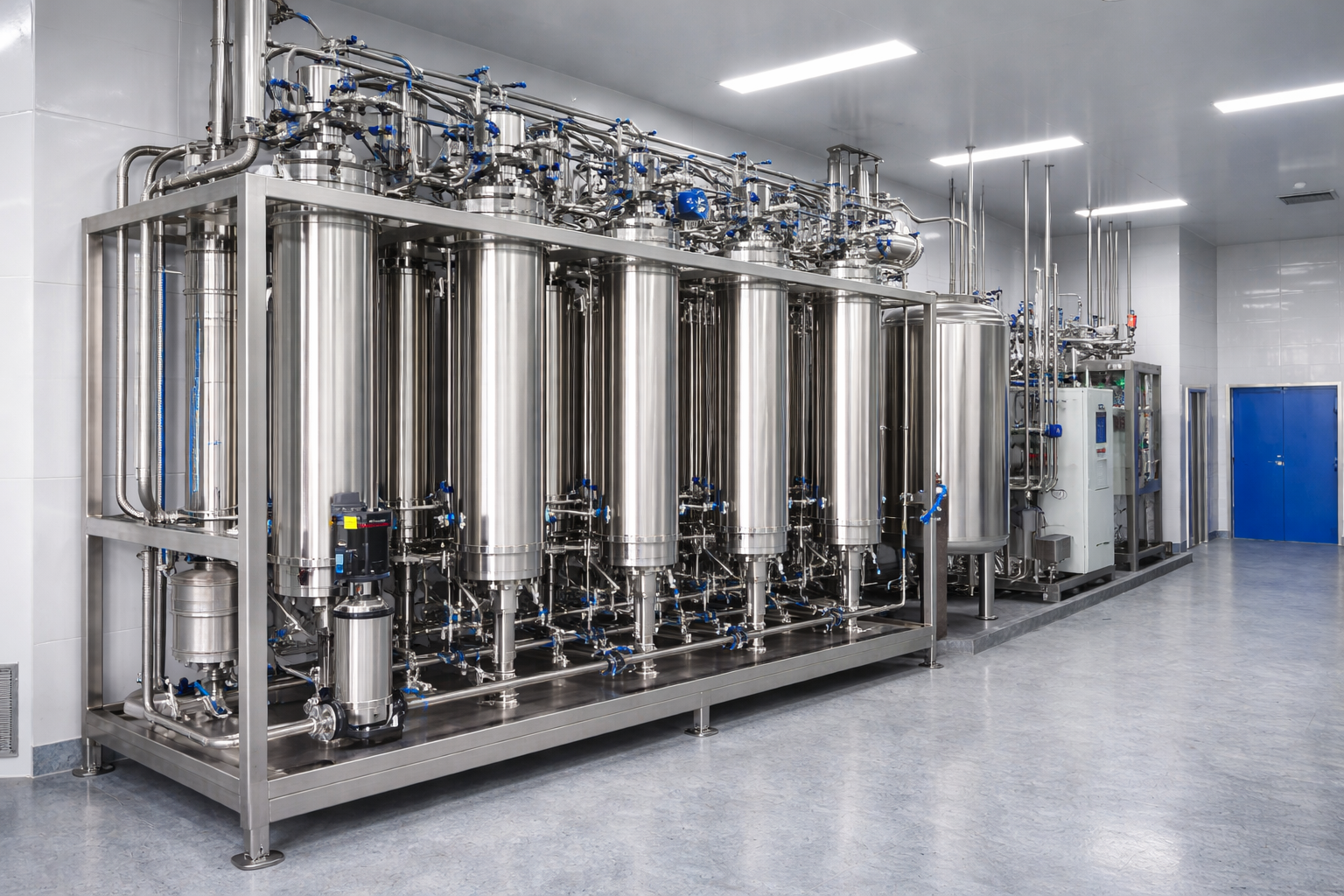
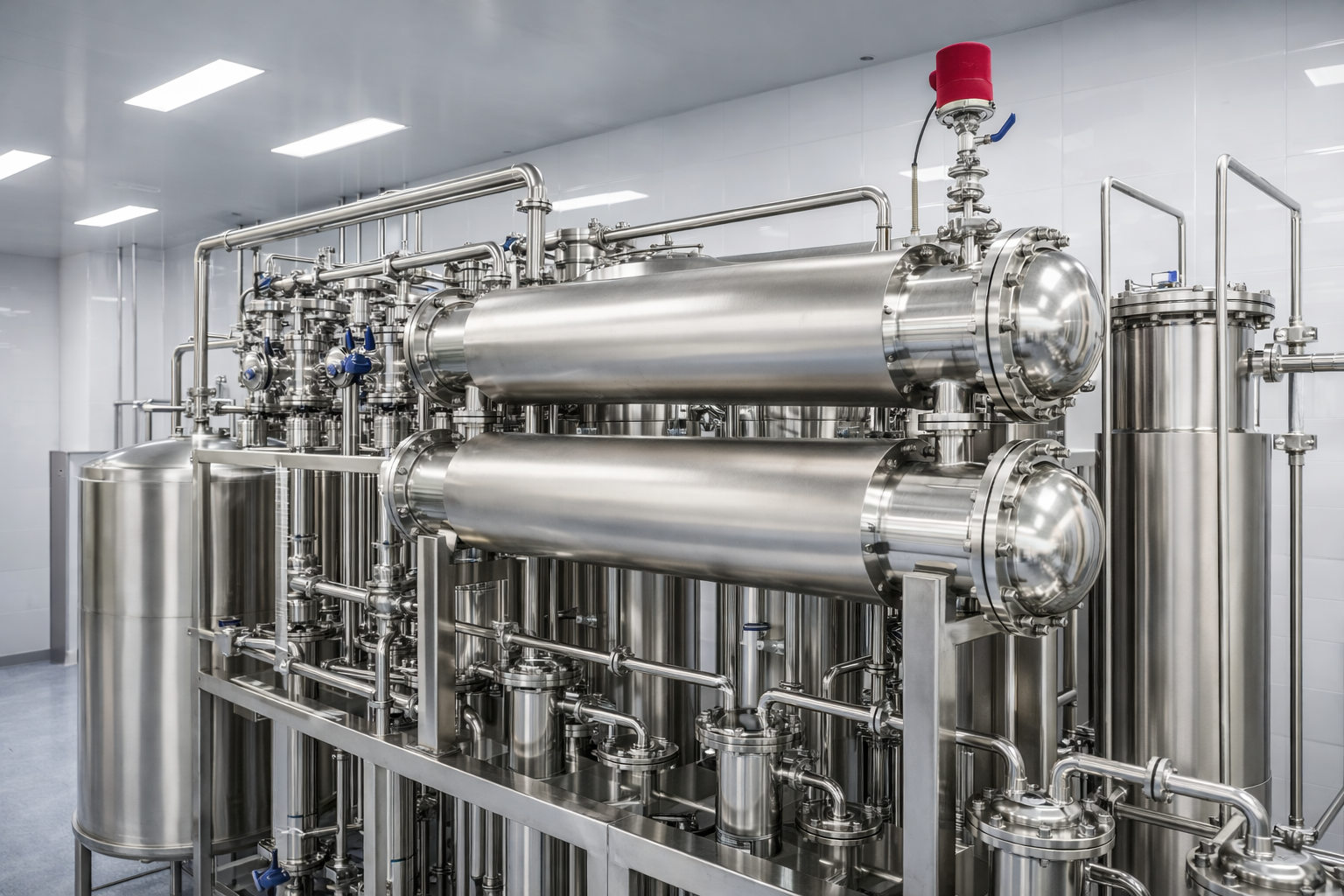
A Multi-Effect Distiller (MED) is a thermal water purification system used to generate Water for Injection (WFI) for pharmaceutical and biotechnology manufacturing. It combines controlled evaporation, vapor separation, condensation, and thermal energy recovery to produce high-purity distillate.
CHONGYANG WATER designs and manufactures customized multi-effect distillation systems for injectable drug manufacturing, sterile processing, vaccine production, and other pharmaceutical applications requiring reliable WFI generation.
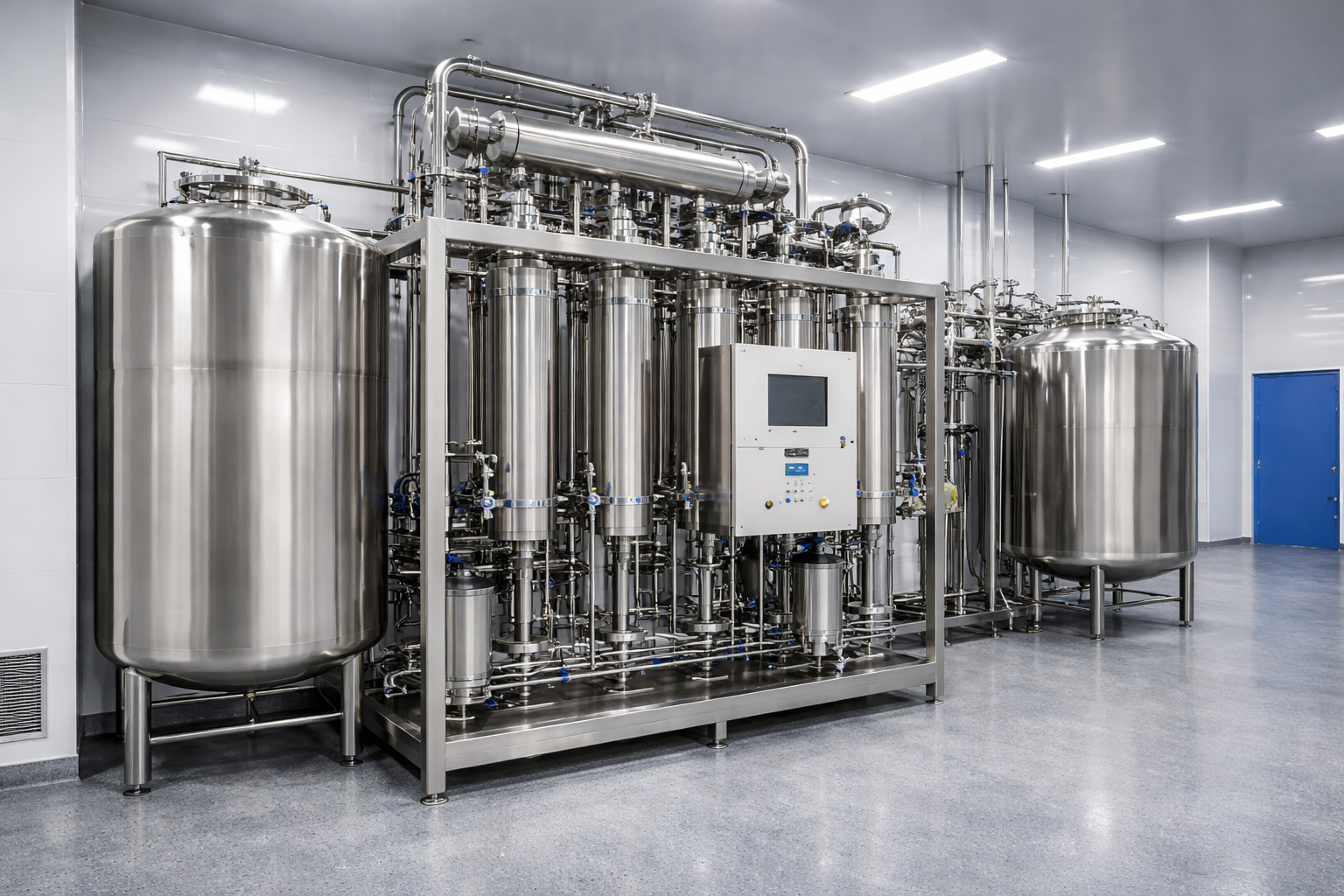
Our equipment integrates multiple evaporation effects, feed water preheating, sanitary vapor separation, heat recovery, online instrumentation, and PLC/HMI automation. The engineering design can be configured to support applicable USP, EP, JP, and GMP requirements, subject to qualification and performance verification.
Key System Capabilities
100–10,000 L/h and Customized Capacities
Multi-Effect Thermal Distillation
Typically 3–8, According to Design
SS316L Stainless Steel
PLC / HMI / Optional SCADA Interface
FAT / SAT / Qualification Support
What Is a Multi-Effect Distiller?
A pharmaceutical multi-effect distiller produces WFI by evaporating appropriately treated feed water and separating the generated vapor from liquid droplets and non-volatile contaminants. The purified vapor is subsequently condensed into distillate.
Unlike a single-effect distillation process, a multi-effect system transfers thermal energy between successive evaporation stages. Vapor generated in one effect supplies heat to another effect operating at a lower pressure and temperature.
This cascading energy transfer improves thermal efficiency and reduces the requirement for fresh heating steam compared with an equivalent conventional single-effect arrangement.
Major Equipment Components
- Purified water feed connection and feed pump
- Feed water preheating section
- Multiple evaporation columns or effects
- Sanitary vapor separation system
- Inter-effect heat transfer equipment
- Final condenser and WFI outlet
- Non-condensable gas discharge and venting provisions
- Conductivity and temperature instrumentation
- PLC/HMI control panel and safety interlocks
For reliable operation, the MED should receive feed water meeting the manufacturer’s approved inlet specification. A properly designed pharmaceutical purified water system can provide stable feed quality and help control scaling, corrosion, and maintenance requirements.
Multi-Effect Distillation Working Principle
The WFI generation process uses controlled phase-change separation and heat recovery across multiple evaporation effects.
Typical Multi-Effect Distiller Process Flow
Simplified functional flow. Vapor separation and heat exchange occur within the individual effects; the actual arrangement is defined by the approved process design and P&ID.
1. Purified Water Feed and Preheating
Purified water enters the distiller through a controlled feed arrangement. Heat recovered from the process raises the feed water temperature before evaporation, improving the overall thermal balance.
2. First-Effect Evaporation
Plant steam transfers heat across a heat exchange surface in the first effect. Feed water evaporates under controlled operating conditions, while the heating steam remains separated from the pharmaceutical water stream.
3. Heat Recovery Across Multiple Effects
Vapor energy is transferred to downstream effects operating at progressively lower pressures. Each additional effect contributes to the evaporation process while reducing the demand for new external heating energy.
4. Vapor Separation and Contaminant Control
Specially designed vapor separation arrangements help limit liquid droplet carryover. This is important for controlling the transfer of non-volatile impurities and bacterial endotoxins into the distillate.
5. Condensation and WFI Collection
Qualified vapor is condensed into high-purity distillate. The WFI outlet may include conductivity monitoring, temperature monitoring, and automated diversion or rejection logic for water that does not meet the approved operating criteria.
6. Storage and Distribution
The generated WFI is transferred to an appropriately designed sanitary storage and distribution system. Storage temperature, circulation, microbial control, and sanitization are established according to the facility’s validated WFI strategy.
Technical Specifications of Multi-Effect Distillers
CHONGYANG WATER offers different MED configurations according to required WFI capacity, number of effects, plant utilities, installation conditions, and project URS.
Reference Multi-Effect Distiller Models
| Reference Model | Effects | Nominal WFI Capacity |
|---|---|---|
| MED-100 | 3 | 100 L/h |
| MED-500 | 4 | 500 L/h |
| MED-1000 | 5 | 1,000 L/h |
| MED-3000 | 6 | 3,000 L/h |
| MED-5000 | 6 | 5,000 L/h |
| MED-10000 | 8 | 10,000 L/h |
These are reference configurations from the existing product range, not guaranteed specifications for every installation. Final effect count, output, and utility consumption require engineering confirmation.
General Engineering Specifications
| Parameter | Typical Configuration |
|---|---|
| Equipment Type | Multi-Effect Distillation WFI Generator |
| Product Water | Water for Injection (WFI) |
| Feed Water | Qualified Purified Water or Approved Feed Quality |
| Product-Contact Material | SS316L Stainless Steel |
| Surface Finish | Hygienic Finish / Electropolishing as Specified |
| Heating Medium | Plant Steam |
| Cooling Medium | Cooling Water as Required by Design |
| Control System | PLC + HMI |
| Online Monitoring | Conductivity / Temperature / Pressure / Flow as Specified |
| Operation | Automatic Start-Up, Production, Shutdown and Alarm Functions as Configured |
| Construction | Sanitary Design with Appropriate Drainage and Maintenance Access |
| Documentation | P&ID / GA / FAT / SAT / Qualification Support |
All equipment dimensions, steam pressure, utility requirements, operating temperature, and production guarantees must be established in the approved technical proposal.
WFI Water Quality and Pharmaceutical Compliance
A multi-effect distiller must be designed and operated to support the applicable pharmaceutical WFI quality requirements. Final compliance is demonstrated through qualification, validated operating conditions, and routine quality testing.
Important WFI Quality Parameters
| Quality Parameter | Typical USP Reference / Requirement | Engineering Consideration |
|---|---|---|
| Conductivity | USP <645>: Temperature-Dependent Acceptance Criteria | Online Monitoring and Appropriate Test Method |
| Total Organic Carbon | USP <643>: 500 ppb Limit | TOC Testing and Feed Water Control |
| Bacterial Endotoxins | WFI: Not More Than 0.25 EU/mL | Effective Vapor Separation and Qualification |
| Microbiological Quality | Applicable Pharmacopoeial and Site Requirements | Validated Sampling and Microbial Control |
| Documentation | GMP and Project-Specific Requirements | Traceability, FAT, Qualification and Monitoring |
The values above are indicative USP references, not a complete specification for every market. EP, JP and local requirements must be checked against their current applicable editions. Conductivity acceptance is temperature- and method-dependent and should not be represented by a single universal limit.
GMP-Oriented Hygienic Construction
Typical engineering considerations include SS316L product-contact materials, appropriate surface roughness, controlled welding, hygienic drainage, suitable seals, instrument calibration, and material traceability.
For pharmaceutical facilities requiring electronic records and audit trails, automation features supporting 21 CFR Part 11 expectations can be evaluated and included within the agreed project scope.
Utility Requirements and Energy Efficiency
Multi-effect distillation uses thermal energy recovery to improve steam utilization. However, the actual steam economy depends on the number of effects, operating conditions, feed temperature, product capacity, and heat recovery arrangement.
Plant Steam
The distiller requires a suitable heating steam supply. Available pressure, temperature, steam quality, and flow rate must be confirmed before final equipment selection.
Purified Water Feed
Stable feed water quality is important for minimizing scaling and maintaining reliable heat transfer. Conductivity, hardness, silica, chloride, and other relevant parameters should be evaluated against the manufacturer’s inlet requirements.
Cooling Water
Cooling water requirements depend on the condenser arrangement and required WFI outlet temperature. The available cooling water temperature, pressure, and flow rate should be provided during project design.
Electrical Power and Instrument Air
Electricity is required for automation, pumps, valves, and instrumentation. Instrument air may be required when pneumatic control valves are included.
Energy Consumption Assessment
CHONGYANG WATER can prepare project-specific utility consumption calculations based on the selected model, number of effects, plant steam conditions, and cooling requirements.
Rather than relying on a fixed steam-consumption figure for all MED systems, the steam economy should be assessed using the approved equipment heat and mass balance.
Key Features and Advantages
Thermal phase-change separation supports pharmaceutical WFI production and control of non-volatile contaminants.
Thermal energy is reused between effects to improve steam utilization and operating efficiency.
Sanitary materials and suitable surface finishing support pharmaceutical production requirements.
PLC/HMI automation supports monitoring, alarms, operating sequences, and process consistency.
Production capacity, number of effects, utilities, and installation layout are selected according to the project URS.
Engineering drawings, FAT/SAT records, and DQ/IQ/OQ/PQ support can be supplied as agreed.
Applications and Integrated WFI System Solutions
Multi-effect distillers are widely used in facilities requiring pharmaceutical-grade Water for Injection.
- Injectable pharmaceutical manufacturing
- Sterile formulation and filling operations
- Biopharmaceutical production
- Vaccine manufacturing facilities
- Final rinsing of equipment where WFI is specified
- Sterile manufacturing support utilities
- Pharmaceutical research and pilot production
Integrated Pharmaceutical Water System
A complete WFI utility project may include upstream purified water generation, multi-effect distillation, WFI storage, sanitary distribution piping, and online monitoring.
CHONGYANG WATER can integrate the MED with a pharmaceutical water storage and distribution system to support controlled water delivery to production areas.
For related pharmaceutical utilities, customers may also consider a pure steam generator for suitable sterilization applications. The WFI distiller and pure steam generator have different product specifications and must be selected for their respective intended uses.
For maintenance planning, see our technical article on multi-effect distiller maintenance for reliable WFI production.
Frequently Asked Questions
1. What is the purpose of a multi-effect distiller?
A multi-effect distiller generates high-purity distillate for pharmaceutical WFI applications using evaporation, vapor separation, condensation, and heat recovery.
2. How many effects are required for a WFI distiller?
The number of effects depends on production capacity, steam economy, available utilities, equipment configuration, and project economics. Typical systems may use three to eight effects, but the final design is project-specific.
3. Can a multi-effect distiller use raw water directly?
Raw water is generally unsuitable as direct feed for a pharmaceutical MED. Properly treated feed water meeting the approved inlet specification is required to control scaling, contamination risks, and equipment performance.
4. What is the difference between a multi-effect distiller and a pure steam generator?
A multi-effect distiller is designed primarily to produce WFI as a liquid product. A pure steam generator produces steam meeting specified pharmaceutical requirements for suitable sterilization and process applications.
5. Does a multi-effect distiller require plant steam?
Conventional MED equipment normally uses plant steam as its main heating utility. The required steam pressure and consumption depend on the selected design and operating conditions.
6. Can a MED operate continuously?
Yes. A properly designed MED can support continuous WFI generation within its rated operating range. Maintenance, feed availability, utility supply, and the approved operating strategy determine actual production schedules.
7. What information is required for a quotation?
Please provide the following project information:
- Required WFI production capacity in L/h
- Operating hours and daily WFI consumption
- Feed water quality and available pressure
- Available plant steam pressure and capacity
- Cooling water temperature and availability
- Electrical supply and instrument air conditions
- Installation layout and available equipment space
- Required pharmacopoeial standards and documentation
- WFI storage and distribution requirements
Request a Multi-Effect Distiller for WFI Production Quotation
Looking for a reliable multi-effect distiller manufacturer for pharmaceutical Water for Injection production?
CHONGYANG WATER provides customized multi-effect distillation systems with SS316L hygienic construction, thermal energy recovery, PLC automation, and engineering documentation for pharmaceutical manufacturing facilities.
Send us your required WFI capacity, feed water specifications, steam conditions, and URS to receive a customized technical proposal.