

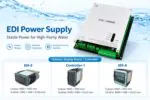
EDI Module
♦ Main Application:
Applications: Pharmaceutical purified water, electronics ultrapure water, laboratory water, boiler feedwater, biotechnology, and industrial deionized water systems.
Technology: YKF Series EDI modules (10–5,000 L/h nominal output), continuous electrodeionization stacks, RO + EDI integration, and Iontech EDI model inquiries.
EDI Module & Electrodeionization Stack for High-Purity Water
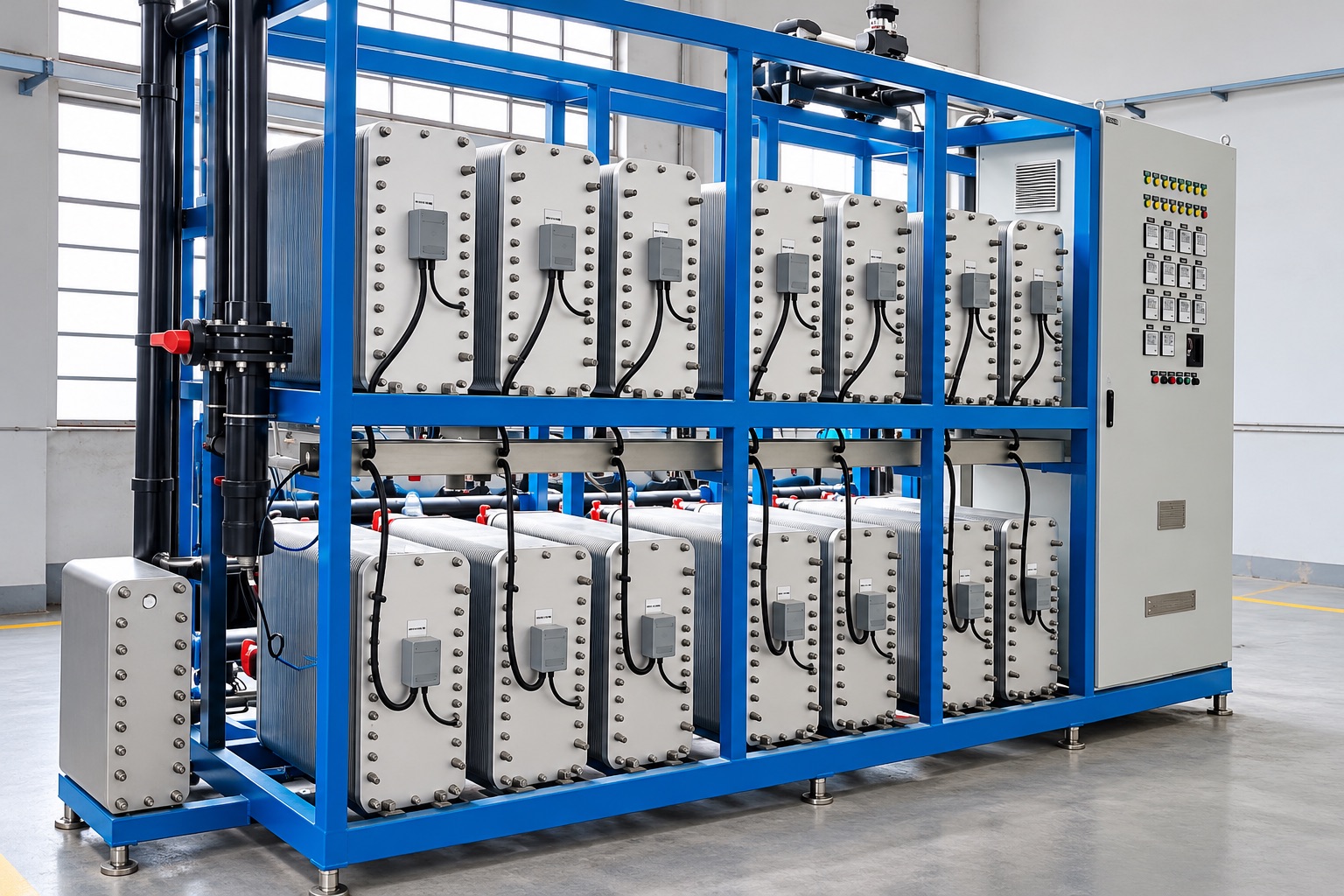
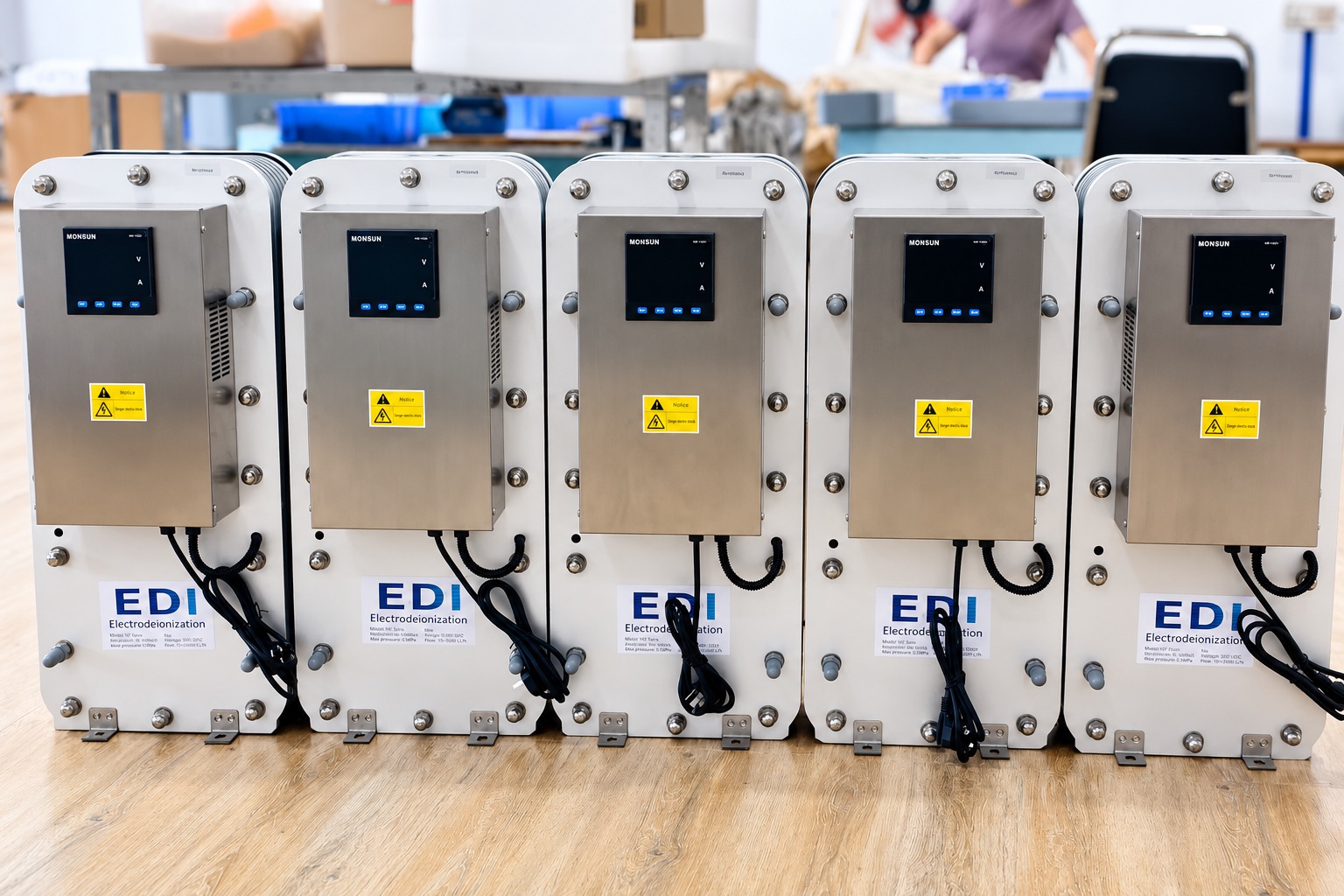
An EDI module (Electrodeionization Module) is a key component of high-purity water treatment systems. It combines ion exchange resins, selective ion exchange membranes, and direct current electricity to continuously remove dissolved ions from reverse osmosis (RO) permeate.
CHONGYANG WATER supplies EDI modules and EDI membrane stacks for pharmaceutical purified water, industrial deionized water, electronics manufacturing, laboratory water, and boiler feedwater treatment applications.
Our product range includes YKF Series EDI modules from 10 to 5,000 L/h nominal water output, together with EDI module selection and replacement support. Iontech EDI modules can also be discussed as a separate brand-specific inquiry, subject to model and supply confirmation.
EDI technology enables continuous deionization without routine acid or caustic chemical regeneration of the ion exchange resin inside the module.
Key Product Features
| Model RangeYKF-10 to YKF-5000 | Nominal Output10–5,000 L/h per module | TechnologyContinuous Electrodeionization |
| FeedwaterRO Permeate | Electrical SupplyDC Power | ApplicationRO + EDI Water Systems |
What Is an EDI Module?
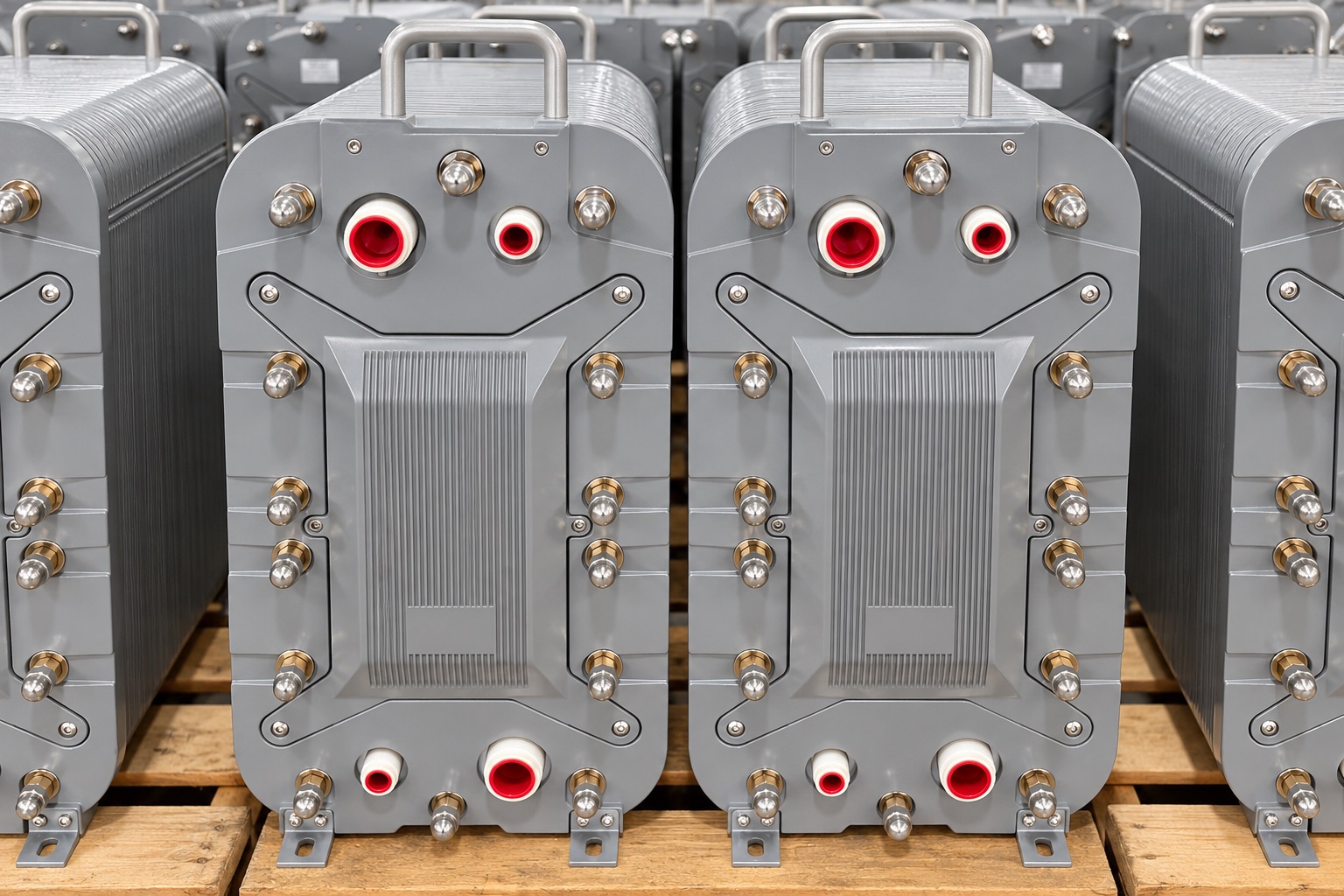
An electrodeionization module, also known as an EDI stack or EDI membrane stack, is a continuous water polishing device typically installed downstream of an RO system.
The EDI module contains ion exchange resins and ion-selective membranes arranged between electrodes. Under an applied direct current, dissolved ions migrate through the membranes into concentrate compartments and are carried away by a separate concentrate stream.
Unlike conventional mixed-bed deionization, the EDI process continuously regenerates the ion exchange resin electrically during normal operation, eliminating routine chemical regeneration of the EDI resin bed.
How Does an Electrodeionization Module Work?
The EDI process combines three mechanisms: ion exchange, selective membrane transport, and electrical ion migration.
1. Ion Exchange
Dissolved cations and anions interact with ion exchange resins inside the dilute compartments, supporting ion removal from the process water.
2. Electrical Ion Migration
A DC electrical field drives positively charged and negatively charged ions toward their respective electrodes through selective membranes.
3. Concentrate Separation
Removed ions are transported into concentrate compartments and discharged through a separate concentrate flow.
4. Continuous Resin Regeneration
Water dissociation under the electrical field helps regenerate ion exchange sites, allowing continuous deionization during normal operation.
RO + EDI High-Purity Water Treatment Process
EDI modules are normally integrated with reverse osmosis pretreatment to reduce the dissolved ionic load and protect the EDI stack.
→
→
→
→
→
→
→
Illustrative product-water flow. The EDI concentrate and electrode streams are managed separately and are not part of the product-water flow. Tank-based and direct-feed arrangements depend on the system design.
YKF Series EDI Module Models and Specifications
The YKF Series EDI modules are available in multiple nominal production capacities for compact, laboratory, pharmaceutical, and industrial high-purity water applications.
The following specifications reproduce the supplied model tables. Dimensions are shown in millimeters, and the voltage and current values are DC operating ranges.
Small-Capacity EDI Modules: YKF-10 to YKF-300
| Model | Min. Output L/h |
Normal Output L/h |
Max. Output L/h |
Voltage DC V |
Current DC A |
L mm |
W mm |
H mm |
|---|---|---|---|---|---|---|---|---|
| YKF-10 | 5 | 10 | 20 | 0–50 | 0–1.8 | 50 | 155 | 375 |
| YKF-50 | 10 | 50 | 80 | 0–50 | 0–1.8 | 95 | 165 | 383 |
| YKF-100 | 50 | 100 | 150 | 0–50 | 0–1.8 | 105 | 165 | 383 |
| YKF-150 | 100 | 150 | 200 | 0–50 | 0–1.8 | 115 | 165 | 383 |
| YKF-200 | 150 | 200 | 250 | 0–50 | 0–1.8 | 130 | 165 | 383 |
| YKF-250 | 200 | 250 | 300 | 0–50 | 0–1.8 | 145 | 165 | 383 |
| YKF-300 | 250 | 300 | 350 | 0–50 | 0–1.8 | 160 | 165 | 383 |
Industrial EDI Modules: YKF-500 to YKF-5000
| Model | Min. Output L/h |
Normal Output L/h |
Max. Output L/h |
Voltage DC V |
Current DC A |
L mm |
W mm |
H mm |
|---|---|---|---|---|---|---|---|---|
| YKF-500 | 300 | 500 | 700 | 0–200 | 0–3.5 | 155 | 298 | 675 |
| YKF-1000 | 500 | 1000 | 1500 | 0–200 | 0–3.5 | 230 | 298 | 675 |
| YKF-2000 | 1500 | 2000 | 2500 | 0–300 | 0–3.5 | 380 | 298 | 675 |
| YKF-3000 | 2500 | 3000 | 3500 | 0–300 | 0–3.5 | 530 | 298 | 675 |
| YKF-4000 | 3500 | 4000 | 4500 | 0–400 | 0–3.5 | 680 | 298 | 675 |
| YKF-5000 | 4500 | 5000 | 5500 | 0–400 | 0–4.0 | 780 | 298 | 675 |
Note: All values are based on the supplied YKF product tables. Normal output is the nominal reference capacity. Maximum output is not an unconditional continuous-performance guarantee. Operating conditions, water quality, power supply settings, and connection details should be confirmed before ordering.
Iontech EDI Module & EDI Stack Inquiries
In addition to YKF Series EDI modules, CHONGYANG WATER welcomes inquiries for Iontech EDI modules, Iontech EDI stacks, and replacement electrodeionization components for existing RO + EDI water treatment systems.
For customers searching for an Iontech EDI module supplier or planning an Iontech EDI stack replacement, our team can review the requested model, operating flow, electrical parameters, and installation dimensions before confirming the available supply options.
Please provide the complete Iontech model number, module nameplate photo, product-water flow rate, DC voltage and current, connection arrangement, and existing system operating conditions.
Brand clarification: Iontech and YKF are presented as separate product inquiries. The YKF model specifications shown above are not identified as Iontech specifications. Brand availability and replacement compatibility require confirmation.
EDI Module Performance and Water Quality
EDI modules are designed to polish RO permeate into high-purity deionized water. Actual performance depends on feedwater chemistry, dissolved carbon dioxide, silica, hardness, temperature, flow rate, and electrical operating conditions.
| Performance Parameter | Typical Design Reference |
|---|---|
| Product Water Resistivity | Up to approximately 18 MΩ·cm under suitable conditions |
| Product Water Conductivity | ≤0.1 μS/cm may be achievable with suitable design |
| Ion Removal | High dissolved ion reduction, feedwater-dependent |
| Water Recovery | 90–95% is a possible system design reference |
| Regeneration Method | Continuous electrical regeneration |
| Chemical Resin Regeneration | Not required during normal EDI operation |
These values are general application references, not verified guarantees for every YKF or Iontech model. Confirm model-specific performance with the selected manufacturer’s technical data.
EDI Module Feedwater Requirements
Stable EDI operation requires properly treated RO permeate. Poor feedwater quality can cause scaling, fouling, reduced ion removal efficiency, or module damage.
| Feedwater Parameter | Preliminary Reference |
|---|---|
| Feedwater Source | RO permeate |
| Conductivity | ≤40 μS/cm reference; lower values may be needed |
| Hardness | ≤1 mg/L reference; confirm as CaCO3 |
| Free Chlorine | Not detectable |
| Iron | <0.01 mg/L reference |
| Manganese | <0.01 mg/L reference |
| SDI | <1 reference |
| Temperature | 5–40°C reference |
Important: Carbon dioxide, silica, hardness, oxidants, and microbial contamination should also be evaluated. The selected module’s approved feedwater limits take priority over general reference values.
EDI Module Applications
| Pharmaceutical WaterPolishing RO permeate for purified water generation. | Electronics & SemiconductorDeionization stages in ultrapure water treatment systems. | Laboratory WaterHigh-purity water preparation for analytical applications. |
| Power & Boiler FeedwaterLow-conductivity makeup water for suitable systems. | BiotechnologyWater polishing for bioprocess support utilities. | Industrial Deionized WaterContinuous deionization for manufacturing processes. |
EDI Module vs. Conventional Mixed-Bed Ion Exchange
| Comparison | EDI Module | Mixed-Bed Ion Exchange |
|---|---|---|
| Regeneration | Continuous electrical regeneration | Periodic chemical regeneration or resin replacement |
| Operation | Continuous under suitable conditions | Service cycles between regeneration or replacement |
| Feedwater | Requires low-ionic-load RO permeate | Depends on resin capacity and system design |
| Power Requirement | DC electrical power required | No DC field for resin polishing |
| Chemical Handling | No routine acid/caustic resin regeneration | May require chemical regeneration |
EDI Stack Replacement and Module Selection
When replacing an existing EDI membrane stack, matching the nominal flow rate alone is not sufficient. Electrical requirements, hydraulic connections, installation dimensions, operating pressure, and feedwater conditions must also be evaluated.
- Existing EDI brand and complete model number
- Normal and maximum product-water flow
- DC voltage and current requirements
- Module length, width, and height
- Feed, product, concentrate, and electrode-stream connections
- Feedwater conductivity, hardness, silica, and CO2
- Current product-water conductivity or resistivity
- Available installation space and piping arrangement
For Iontech EDI module replacement inquiries, please send the original nameplate and system photos so that model availability and possible alternatives can be reviewed.
Why Choose CHONGYANG WATER for EDI Modules?
| Wide Model SelectionYKF Series modules with nominal capacities from 10 to 5,000 L/h. | RO + EDI IntegrationEngineering support for complete high-purity water treatment systems. | Replacement SupportTechnical review of existing EDI module requirements. |
| Industrial ApplicationsPharmaceutical, electronics, power, laboratory, and manufacturing water. | Customized EngineeringModule quantity, flow distribution, instrumentation, and control integration. | Technical ConsultationSupport for model selection and operating condition evaluation. |
Frequently Asked Questions About EDI Modules
1. What is an EDI module?
An EDI module continuously removes dissolved ions from RO permeate using ion exchange resin, selective membranes, and direct current electricity.
2. What is the difference between an EDI module and an EDI stack?
The terms are often used interchangeably for the assembled electrodeionization component. Specific manufacturers may use different product terminology.
3. What EDI module capacities are available?
The YKF Series covers nominal output capacities from 10 to 5,000 L/h per module, with different minimum and maximum flow ranges.
4. What is the normal flow rate of the YKF-1000 EDI module?
The YKF-1000 has a nominal water output of 1,000 L/h, with a listed flow range of 500–1,500 L/h.
5. What is the capacity of the YKF-3000 EDI stack?
The YKF-3000 has a nominal output of 3,000 L/h and a listed operating flow range of 2,500–3,500 L/h.
6. What is the largest YKF EDI module listed?
The YKF-5000 is the largest listed model, with a nominal output of 5,000 L/h and a maximum listed output of 5,500 L/h.
7. Does an EDI module require reverse osmosis pretreatment?
EDI modules are normally fed with RO permeate. Direct untreated feedwater can cause scaling, fouling, and poor performance.
8. Can EDI produce 18 MΩ·cm high-purity water?
High resistivity approaching 18 MΩ·cm may be achievable with appropriate feedwater quality and operating conditions. Performance must be confirmed for the selected module.
9. Does an EDI module require chemical regeneration?
Routine acid and caustic regeneration of the EDI resin is not required during normal operation. Cleaning chemicals may still be needed for maintenance.
10. Do you offer Iontech EDI module options?
Customers can submit Iontech EDI module inquiries for model review and supply confirmation. Please provide the exact model number and existing module specifications.
11. Can a YKF EDI module replace an existing Iontech EDI stack?
Replacement compatibility cannot be assumed. Flow rate, electrical parameters, dimensions, hydraulic connections, and operating conditions must be reviewed before any alternative is proposed.
12. What information is needed for an EDI module quotation?
Please provide:
- Required EDI module model or brand
- Nominal product-water flow rate
- RO permeate conductivity and feedwater analysis
- Target product-water conductivity or resistivity
- Available DC voltage and current
- Installation dimensions and connection details
- New installation or replacement application
Related High-Purity Water Treatment Equipment
Explore additional CHONGYANG WATER solutions for RO pretreatment, high-purity water production, and water treatment components.
| Pharmaceutical Purified Water →
RO-based pharmaceutical water purification equipment. |
Ultrafiltration System →
Membrane filtration for water pretreatment. |
Water Treatment Components →
Stainless steel tanks, filters, and auxiliary equipment. |
Request an EDI Module or EDI Stack Quotation
Looking for a reliable EDI module supplier, electrodeionization stack manufacturer, or replacement EDI module for an existing RO + EDI water treatment system?
CHONGYANG WATER offers YKF Series EDI module selection from 10 to 5,000 L/h nominal output and technical review of Iontech EDI module inquiries.
Send us your EDI model number, RO feedwater quality, required flow rate, and operating parameters for a customized quotation.


