
Blog
Cold WFI Systems: How Membrane-Based Water for Injection Works and Where It Is Used
Introduction
Water for Injection (WFI) is a critical utility in pharmaceutical manufacturing, especially for sterile products where microbial contamination and bacterial endotoxins must be strictly controlled.
Traditionally, WFI is produced by multi-effect distillation or vapor compression. Today, cold WFI systems, also called membrane-based WFI systems, offer an alternative using reverse osmosis (RO), electrodeionization (EDI), and ultrafiltration (UF).
These systems are increasingly considered for pharmaceutical facilities seeking energy-efficient WFI generation and automated water quality control.
1. What Is a Cold WFI System?
A cold WFI system produces Water for Injection without using evaporation and condensation as the primary purification method.
Instead, multiple membrane-based purification stages remove dissolved salts, organic contaminants, microorganisms, and bacterial endotoxins.
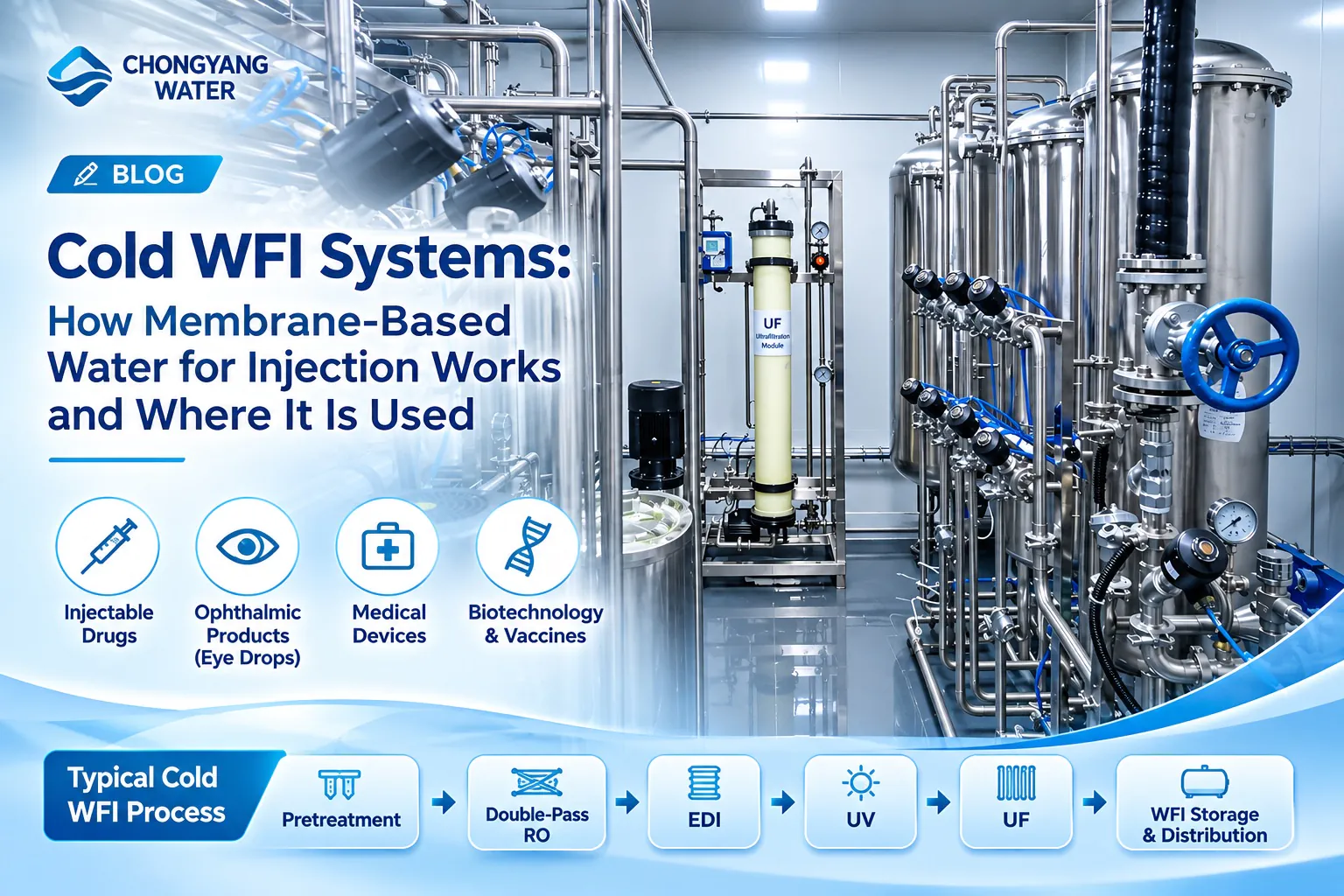
A typical membrane-based WFI system includes:
Typical Cold WFI Generation Process
RO
Tank
Loop
On mobile devices, swipe horizontally to view the complete process flow.
Each stage performs a specific function:
- Pretreatment: Removes suspended solids, hardness, and other contaminants that may damage membranes.
- Double-Pass RO: Reduces dissolved salts, organic substances, and microbial contamination.
- EDI: Continuously removes residual dissolved ions.
- UV Treatment: Supports microbial control or organic reduction, depending on the UV system design.
- Ultrafiltration: Provides an additional barrier for bacterial endotoxins and microorganisms.
The complete process requires validated microbial control, hygienic design, and reliable monitoring.
2. Which Industries Use Cold WFI Systems?
Membrane-based WFI systems can support several pharmaceutical and healthcare manufacturing applications.
| Industry | Typical WFI Applications |
|---|---|
| Injectable Pharmaceuticals | Injectable drug formulation and critical equipment rinsing |
| Biotechnology | Biologics manufacturing and sterile process preparation |
| Vaccine Manufacturing | Vaccine formulation and sterile production utilities |
| Ophthalmic Products | Selected sterile eye-drop formulations and critical cleaning applications |
| Medical Device Manufacturing | Final rinsing of certain devices requiring stringent endotoxin control |
| Sterile Medical Solutions | Irrigation solutions and other sterile preparations where WFI is specified |
| Pharmaceutical R&D | Sterile formulation development and laboratory-scale production |
Important: Not every ophthalmic product or medical device requires WFI. The appropriate water grade depends on the product formulation, intended use, manufacturing process, and applicable regulatory requirements.
3. Cold WFI vs. Traditional Distillation
Both technologies can produce pharmaceutical WFI when properly designed, qualified, and operated.
| Comparison | Cold Membrane WFI | Distillation WFI |
|---|---|---|
| Main Technology | RO + EDI + UF | Multi-effect or vapor compression |
| Main Energy Demand | Electricity | Thermal energy and electricity |
| Steam Requirement | Not normally required for generation | Depends on distillation technology |
| Microbial Control | Multiple barriers and validated sanitization | Thermal separation and system controls |
| Operating Costs | Potentially lower with suitable utilities | Dependent on steam and energy costs |
| System Validation | Required | Required |
Cold WFI may reduce thermal energy consumption, but it requires rigorous control of membrane integrity, microbial contamination, endotoxins, and sanitization.
The best technology depends on capacity, utilities, regulatory requirements, and lifecycle cost.
4. Key Engineering Requirements
A reliable cold WFI generation system should incorporate:
- SS316L hygienic product-contact piping and storage equipment
- Sanitary design with minimal dead legs and effective drainage
- Heat-sanitizable components where thermal sanitization is specified
- Online conductivity and temperature monitoring
- TOC monitoring where required by the control strategy
- Validated microbial and endotoxin monitoring
- PLC/HMI automation, alarms, and data recording
- Continuous circulation through the WFI storage and distribution loop
The system should be supported by appropriate pharmaceutical water system qualification and validation activities, including DQ, IQ, OQ, and PQ.
5. Does Cold WFI Meet Pharmaceutical Standards?
Membrane-based WFI generation is permitted under applicable pharmacopoeial frameworks, including the European Pharmacopoeia and USP, subject to their respective requirements.
GMP Compliance: Using RO, EDI, and UF does not automatically make a system GMP-compliant.
Manufacturers must demonstrate that the complete system consistently meets applicable WFI quality requirements, including chemical, microbiological, and bacterial endotoxin specifications.
Regulatory expectations, contamination control, system qualification, and ongoing monitoring must be evaluated for each project.
Frequently Asked Questions
Can cold WFI be used for eye-drop manufacturing?
Yes, where WFI is specified by the formulation or manufacturing requirements. Not all ophthalmic products require WFI.
Is cold WFI suitable for medical device manufacturing?
Yes, particularly for applications requiring stringent control of endotoxins and microbial contamination. The required water grade must be established for the specific device and process.
Does cold WFI require hot water sanitization?
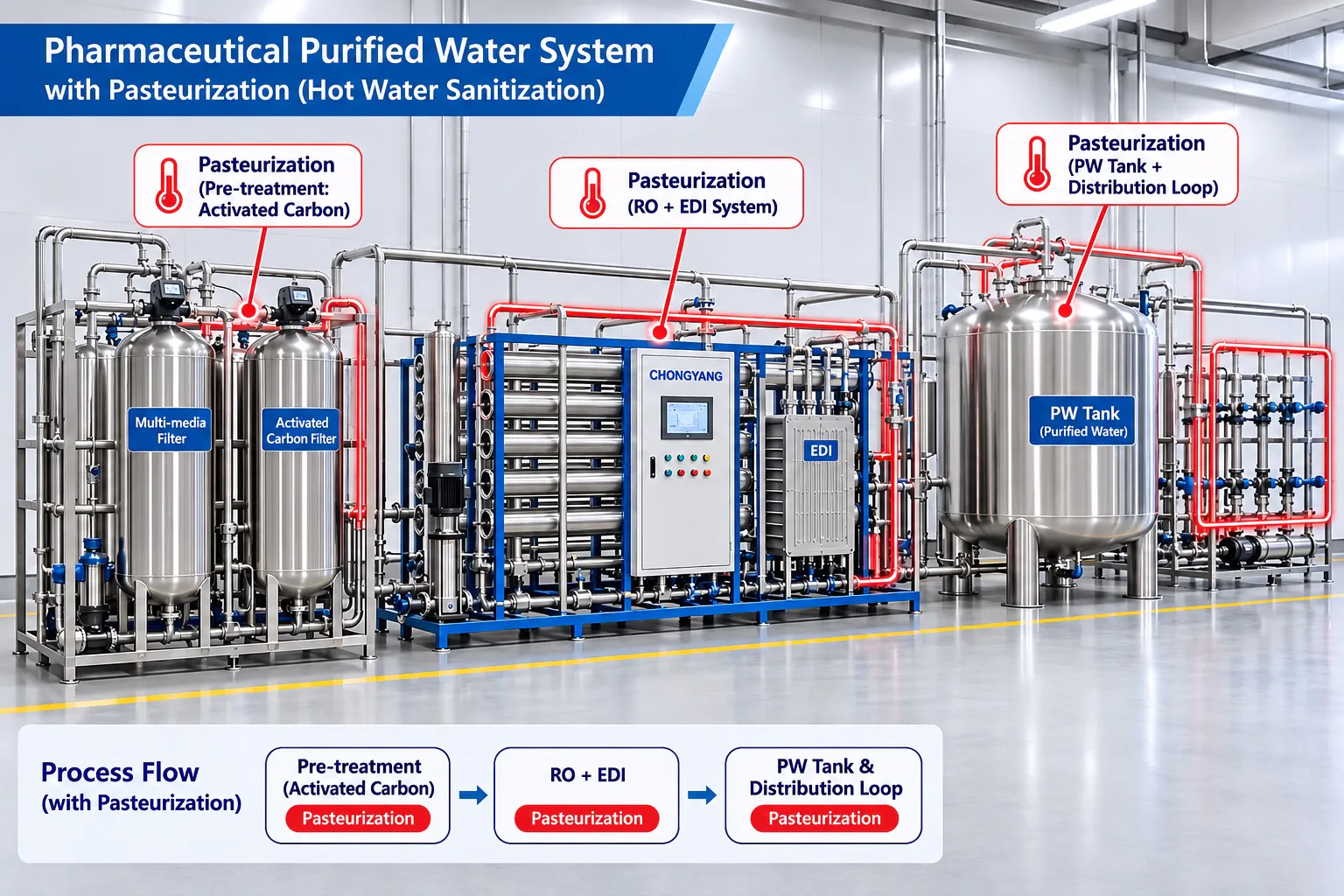
Not universally. However, a validated sanitization strategy is essential, and thermal sanitization is often considered for suitable membrane systems and distribution loops.
Conclusion
Cold membrane-based WFI systems provide an alternative to traditional distillation for pharmaceutical water generation.
By combining double-pass RO, EDI, ultrafiltration, hygienic storage, and validated microbial control, these systems can support injectable pharmaceuticals, biotechnology, selected ophthalmic products, and medical device manufacturing.
Looking for a Membrane-Based WFI System?
CHONGYANG WATER provides customized cold WFI generation systems with RO + EDI + UF technology, SS316L hygienic construction, PLC/HMI automation, and pharmaceutical storage and distribution solutions.
Share your required WFI capacity, feedwater quality, application, and applicable standards with our engineering team.
Contact Us & Request a Technical Proposal →More Posts