What Is WFI (Water for Injection) System? How It Works
1. Introduction
A WFI system (Water for Injection system) is one of the most critical utilities in pharmaceutical manufacturing, directly impacting product sterility, patient safety, and regulatory compliance. WFI is used in the most sensitive applications, including injectable drugs and final rinsing of sterile equipment.
Because it may come into direct contact with the bloodstream, its quality requirements are significantly stricter than purified water.
2. What Is a WFI System?
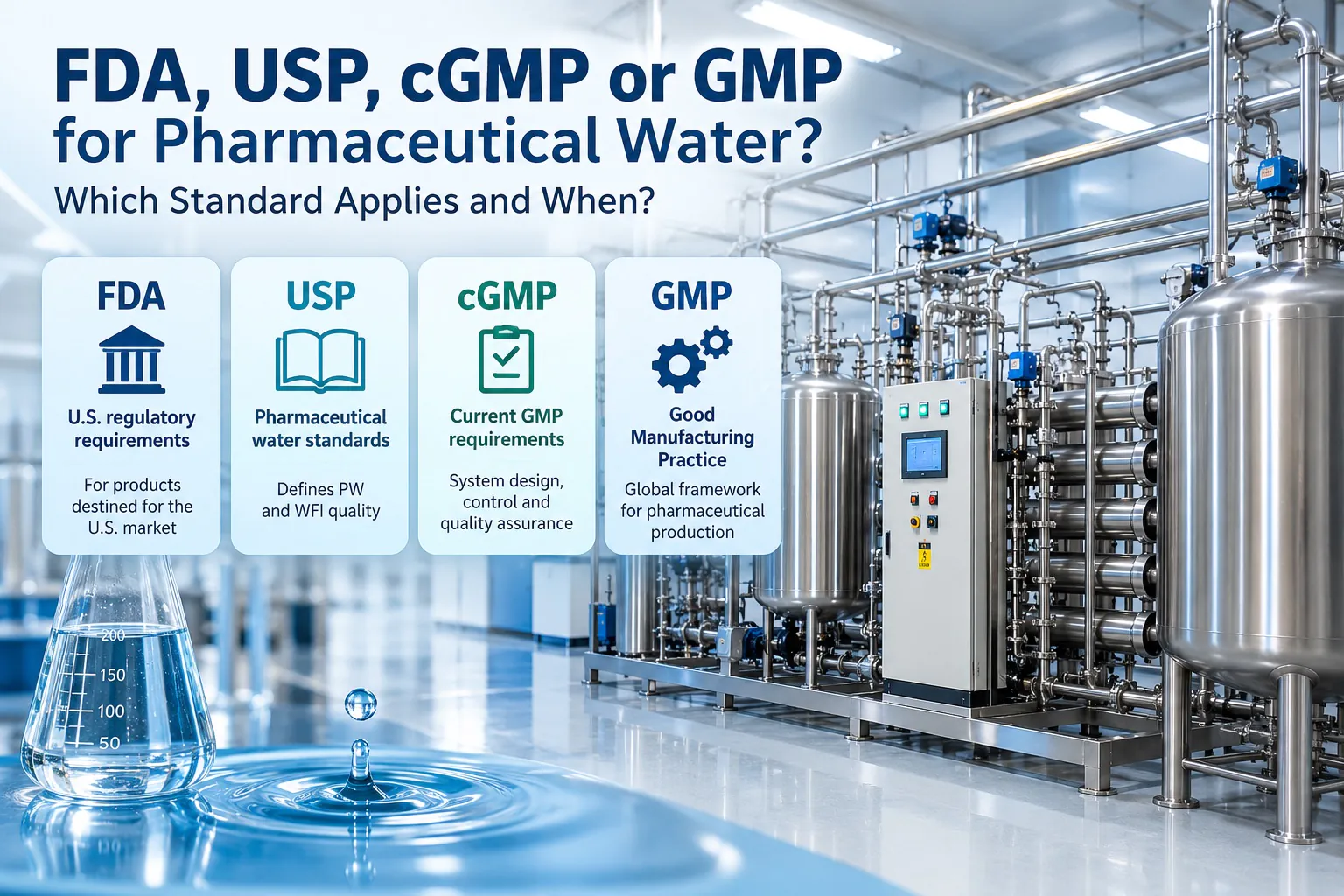
A WFI system is an integrated process designed to produce water that meets strict pharmacopoeial standards such as USP, EP, and WHO, including extremely low limits for microbial contamination and bacterial endotoxins.
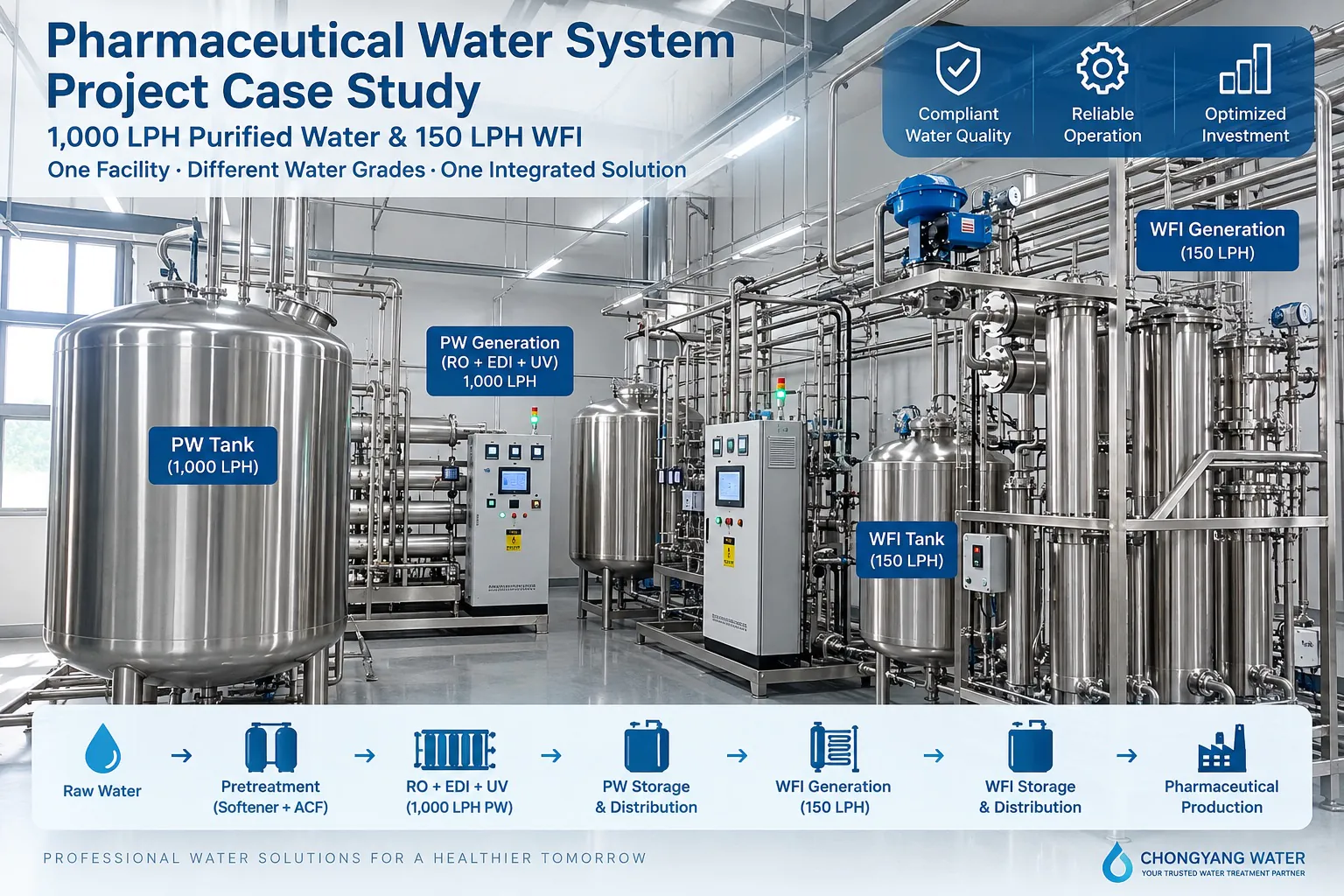
Traditionally, WFI is produced using distillation technologies, such as multi-effect distillers or vapor compression systems. In modern applications, membrane-based WFI systems using RO + EDI + UF are also accepted under certain regulations when validated performance is demonstrated.
3. Applications
WFI is primarily used in sterile pharmaceutical manufacturing where the highest level of purity is required. Typical applications include the formulation of injectable drugs, vaccines, and biologics, as well as final rinsing of vials, ampoules, and critical process equipment.
It is also used in clean steam generation, biotechnology, aseptic processing, and medical device manufacturing where contamination control is critical.
4. Key Features
A WFI system must be designed according to strict GMP and hygienic engineering standards. All wetted parts are constructed from SS316L stainless steel, with electropolished internal surfaces to minimize microbial adhesion.
The system includes fully drainable piping, zero dead-leg design, orbital welding, continuous circulation, and temperature control. Advanced PLC + SCADA control supports real-time monitoring of temperature, conductivity, and flow.
5. How It Works
In a traditional WFI system, feed water is first treated through pretreatment and purification stages, then enters a multi-effect distiller. The distillation process uses evaporation and condensation to separate pure water from contaminants, including endotoxins.
In membrane-based systems, WFI is produced through RO, EDI, and ultrafiltration. RO removes dissolved salts and organics, EDI removes residual ions, and UF acts as a final barrier to remove endotoxins and microorganisms.
6. Conclusion + CTA
A WFI system is a highly engineered and regulated solution designed to deliver ultra-pure water for the most critical pharmaceutical applications. Its performance depends on robust design, proper material selection, effective microbial control, and continuous monitoring.
Looking for a reliable WFI system for your pharmaceutical project? We provide customized WFI solutions, including distillation and membrane-based systems, along with complete design and validation support DQ/IQ/OQ/PQ. Contact us today to get a tailored solution for your application.